
ERBIL, Kurdistan Region - Plans are underway to end gas flaring, expand solar energy, and support sustainable infrastructure, Iraq’s oil ministry said on Friday, as part of its pioneering efforts to reduce the carbon footprint of the country and aid in its clean energy transition.
"The ministry is implementing a set of strategic projects aimed at ending gas flaring … to achieve the goal of zero flaring," Oil Ministry spokesperson Salim al-Rikabi told the Iraqi News Agency (INA), stressing its commitment toward "continued adoption of the latest technologies in various sectors of the oil industry."
The ministry’s projects include the Ratawi and Bin Umar gas project sites, alongside the expansion of Basra gas projects, said the spokesperson. Rikabi noted that the ministry has been a pioneer in addressing carbon footprint, citing its launch of solar energy projects, including the 1,000-megawatt Ratawi project, prior to the establishment of the carbon company in the environment ministry.
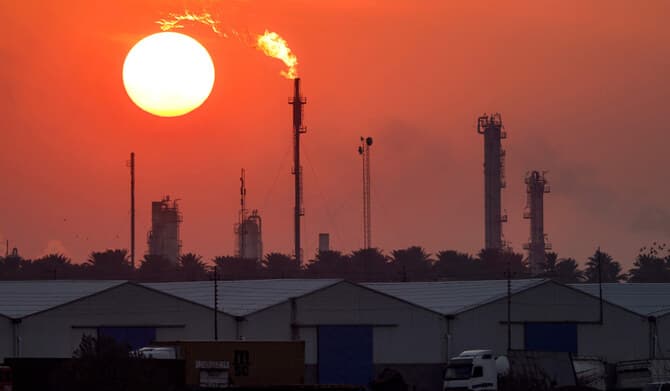
Iraq represents some of the world’s highest gas flaring indices with one-seventh of the global flaring carbon dioxide emissions coming from Iraq and the Kurdistan Region. The emission of carbon dioxide or greenhouse gas, which is identified as black carbon, is considered one of the main contributors to global warming and increasing causes of air pollution. In the past decade, flaring increased by 39%, exceeding 18.02 billion cubic meters per year according to a 2025 Rudaw report.
The report identified 214 oil production fields and oil refinery locations in Iraq and the Kurdistan Region with high temperature and carbon dioxide emission density levels from flaring alone. The close proximity of project sites and flaring poses increasing health risks to the rural population who face exposure from routine flaring.
Oil companies in Iraq have signed memoranda of understanding with international companies since 2024 for the development of associated gas fields and cessation of gas flaring, as well as recommendations to address policy and close infrastructure gaps.
The Ratawi project is a result of an international partnership with the Iraqi-Chinese framework agreement, also known as the Iraqi-Chinese Fund, which supports infrastructure projects. In turn, the oil ministry allocates the revenues of 150,000 barrels of oil per day deposited into the fund to finance these projects.
The spokesperson pointed out that the ministry is keen on utilizing the latest oil and industrial technology in its companies across the extraction, refining, and gas sectors in cooperation with state and international companies, contributing to the development of the oil industry and boosting production efficiency.