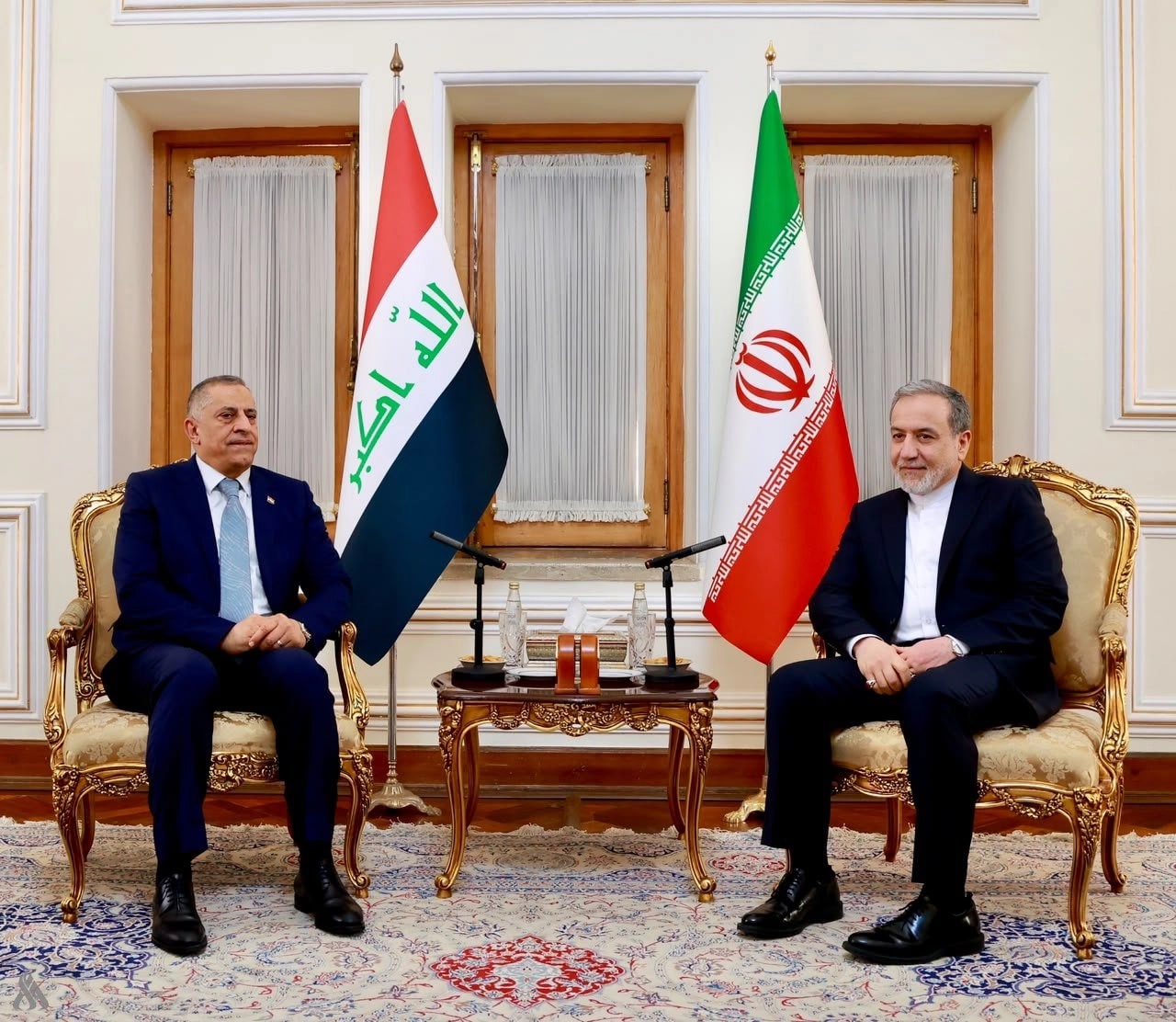

ERBIL, Kurdistan Region - Iraqi National Security Adviser Qasim al-Aboudi met with Iranian Foreign Minister Abbas Araghchi in Tehran on Sunday to discuss Iranian Kurdish opposition groups based in the Kurdistan Region, as Baghdad and Tehran push to fully implement their joint security agreement.
Aboudi met with Araghchi as part of an official visit to Iran at the head of a high-level security delegation, a day after meeting with Secretary of Iran’s Supreme National Security Council Mohsen Rezaei.
During the meeting, Aboudi and Araghchi “addressed border crossings, border security, and plans for the deployment of Iraqi forces drawn up by Commander-in-Chief of the Armed Forces Ali al-Zaidi to secure the borders. It also discussed addressing the issue of Iranian opposition groups on Iraqi territory, as well as unofficial border crossings that are not under federal authority in Iraq,” said a statement from Aboudi’s office.
Iraq and Iran signed a joint security agreement in March 2023, under which Baghdad committed to disarming Iranian Kurdish opposition groups based in the Kurdistan Region, relocating them away from the shared border, and preventing them from using Iraqi territory to launch attacks against Iran.
The agreement followed repeated Iranian missile and drone strikes targeting Kurdish opposition groups in the Kurdistan Region, with Tehran accusing them of fueling anti-government unrest inside Iran.
Despite the agreement, Iran has continued targeting the groups, ramping up attacks following the outbreak of the US-Israeli war against Iran in late February.
Aboudi told Rudaw in October that Baghdad was committed to resolving the issue of Iranian Kurdish opposition groups through peaceful means in coordination with the Kurdistan Regional Government (KRG).
He said Baghdad had agreed to establish camps for members of the groups and their families away from the Iranian border, while the United Nations was processing asylum applications.
During Saturday’s meeting between Aboudi and Rezaei, the two officials stressed the need to fully implement the joint security agreement.
“We emphasize the full implementation of the security agreement between the two countries and the establishment of security along shared borders,” Rezaei said, according to Iran’s Islamic Revolutionary Guard Corps (IRGC)-affiliated Tasnim news agency.
Aboudi’s office said in a separate statement on Saturday that the two sides discussed “counterterrorism coordination, stepping up efforts to secure their shared borders, preventing security breaches and threats, and advancing the implementation of the joint security agreement.”
Aboudi’s talks with Iranian officials also touched on recent measures introduced by Iraqi Prime Minister Ali al-Zaidi to establish federal control over the country’s borders and corruption, with Tehran expressing support for the Iraqi government’s efforts.
During Sunday’s meeting, the Iranian side voiced support for Zaidi’s measures to combat corruption and promote security and stability, according to Aboudi’s office.
Aboudi’s visit to Tehran comes amid escalating tensions between Erbil and Baghdad after Zaidi last Tuesday ordered federal authorities to assume control of all border crossings in the Kurdistan Region and close unofficial crossings along the country’s international borders.
Iraqi border forces on Thursday closed two KRG-administered crossings: the Pshta crossing with Iran in Halabja province and the al-Waleed crossing with Syria in Nineveh province.
Kurdish leaders have strongly opposed Baghdad’s measures, describing them as an infringement on the Kurdistan Region’s constitutionally guaranteed powers.
Iranian officials have also warned against foreign interference in relations between Tehran and Baghdad, amid growing international attention to the Iraqi government’s recent measures.
During Saturday’s meeting with Aboudi, Rezaei warned against foreign powers “negatively” affecting economic cooperation between Tehran and Baghdad, saying that an “independent, powerful and developed Iraq” could constitute one of the pillars of a new regional security architecture.
Aboudi reaffirmed Baghdad’s commitment to fully implementing the security agreement, stressing that Iraq would not allow its airspace or territory to be used against Iran or other neighboring countries, Tasnim reported.
Mohammad Mokhber, an adviser to Iran’s Supreme Leader Mojtaba Khamenei, said on Saturday that Iran had stood by Iraq in its most difficult days. He urged Baghdad to remain vigilant at its borders so it would not become “a tool in the hands of the enemies of Islam” or carry out the policies of US President Donald Trump. Trump on Friday publicly backed Zaidi’s efforts to stop oil smuggling and extend state authority across Iraq.
Asked about Mokhber’s remarks, Iraqi government spokesperson Haider al-Aboudi told Saudi broadcaster Al Hadath on Saturday that Iraq neither interferes in the internal affairs of its neighbors nor allows them to interfere in its own.