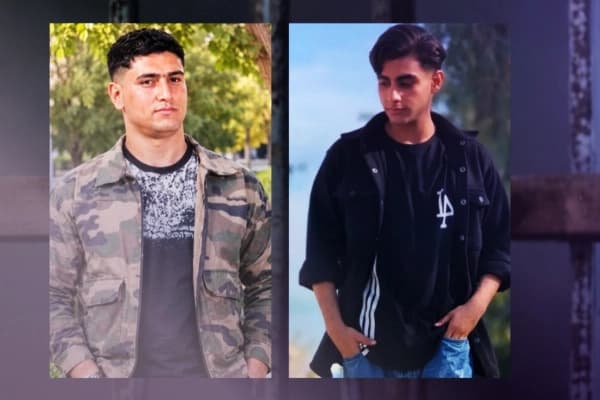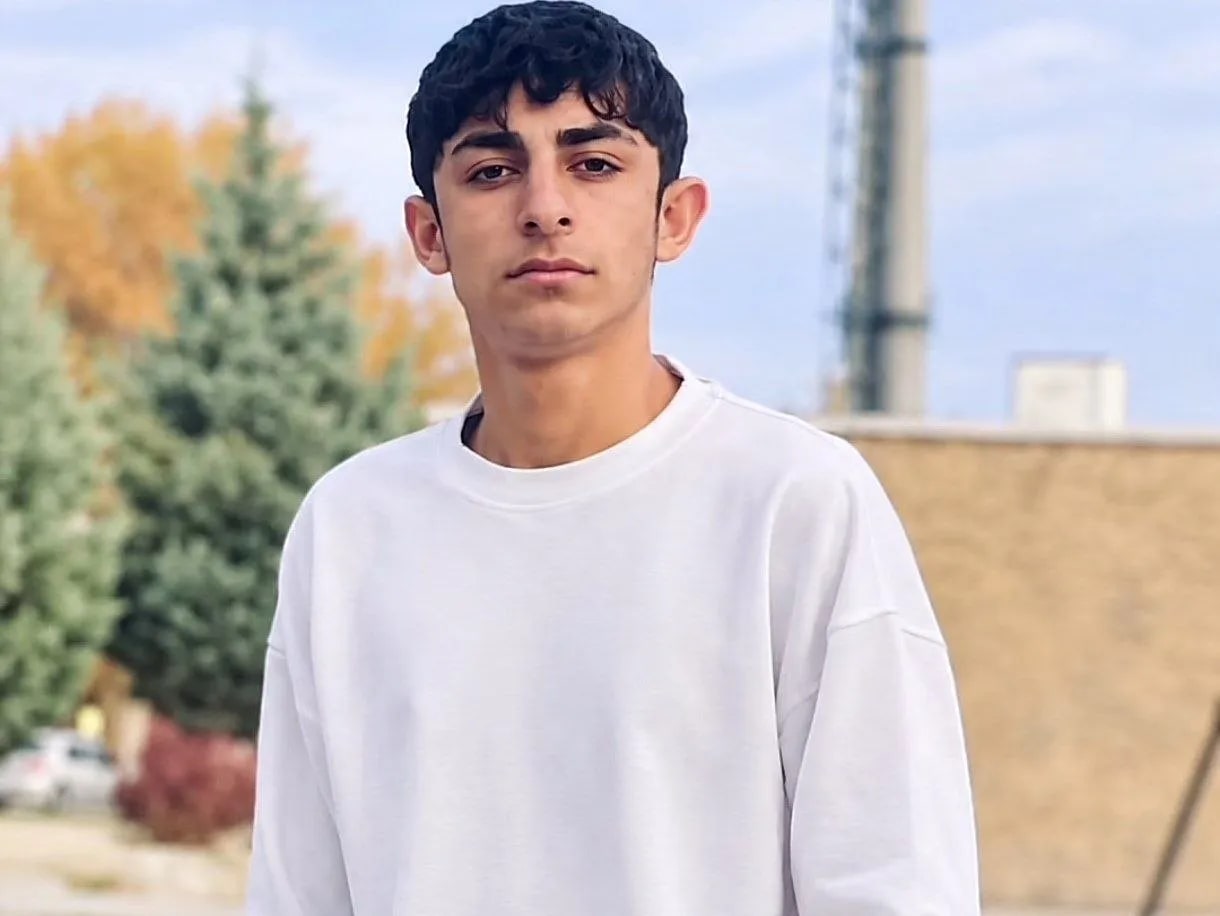

ERBIL, Kurdistan Region — An 18-year-old Kurdish man was stabbed to death and two others were wounded in Iran’s northwestern city of Urmia after they stepped in to protect a woman being assaulted in public, one of the survivors told Rudaw on Tuesday, amid growing concerns over rising violence against women in the country.
Yousef Moradi Balarghu was killed on Friday, November 20, in Urmia's Qareh Qaj neighbourhood. Two brothers, Payman and Sipan, were also wounded while attempting to save the woman.
"He kept grabbing her by the hair and threatening to behead her," Payman, one of the survivors, told Rudaw on Monday.
"He pointed the knife at us and started insulting and threatening us," Payman recalled. "This is not your business. Don't interfere," the attacker told them.
All the while, the woman continued sounding desperate pleas for help.
"For God's sake, do something for me," Payman recalled her shouting.
"We couldn't bear seeing a woman in that situation," he said. "Our main priority was to ask him to stop and calm the situation."
The attacker then stabbed the three men, fatally wounding Moradi and seriously injuring the brothers.
At least 113 women have been killed in documented femicide cases across Iran between January and October 2026, including killings linked to so-called “family honor” and domestic violence, according to the Norway-based Hengaw Organization for Human Rights.
The UN Office on Drugs and Crime (UNODC) and UN Women released alarming figures on Tuesday showing that approximately 47,000 women and girls worldwide were killed by intimate partners or family members in 2025, averaging five every hour, or 129 each day.
The figure accounted for 60 percent of the estimated 78,000 intentional killings of women and girls globally. The data was released ahead of the International Day for the Elimination of Violence against Women on November 25.
Payman has since been discharged from hospital, but Sipan remains in intensive care.
"My brother is responsive, but his condition is not good," Payman said, explaining that a stab wound has damaged Sipan's intestine and that he is struggling to breathe independently.
Meanwhile, Moradi's father separately confirmed his son's death to Rudaw and corroborated the three men’s account.
He said his son had been buried and that he intended to pursue justice through legal means.
West Azerbaijan police chief Brigadier General Jamal Salmani separately confirmed that a suspect was arrested within 24 hours of the incident.
Payman called for tougher action against violent offenders. The Urmia attack comes amid further reports of suspected “honor killings” in Iran's western Kurdish region.
In mid-November, Sogand Sayadi, a 16-year-old Kurdish schoolgirl from Kermanshah, died after her father allegedly threw from the fifth floor of a building. According to Hengaw, she had previously warned school officials that her father might kill her. Iranian authorities arrested her father and the school principal.
Last week, Helia Fattahi, a 19-year-old Kurdish woman from Sanandaj, was killed by her parents after disclosing that she was pregnant. Hengaw reported that her parents forced her to swallow medication, after which they severely beat her. They suffocated her when she survived the initial, severe physical assault. Both were reportedly arrested.
Hengaw recorded 23 femicides in October, 14 in September and 19 in August, highlighting the continuing scale of violence against women.
Meanwhile, Urmia city council member Sadegh Tavakoli-Mehr has proposed naming a street after Moradi in recognition of his courage and intervention, as his family seeks justice for his killing.
Iran has no comprehensive law criminalizing violence against women. A bill originally proposed under reformist President Hassan Rouhani was so extensively altered that the government decided to withdraw it last year.
"For far too long, we have seen alarming statistics," said Monica Juma, Executive Director of UNODC, in the organization’s Tuesday statement.
"Frightening attitudes, social norms, and the failure of institutional safeguards create an environment in which killing a wife, daughter, mother, or sister becomes 'tolerable'. Changing this reality calls for sustained action across all levels of society," Juma said.