
ERBIL, Kurdistan Region - US Vice President JD Vance said Monday that President Donald Trump would not allow the war with Iran to become a prolonged conflict, but acknowledged that Washington was considering further military and diplomatic pressure on Tehran, as a third American aircraft carrier arrived in the Middle East amid renewed maritime tensions.
“We are not going to allow this to become a 10- or 15-year commitment or, frankly, even a two-year commitment,” Vance told Fox News' Laura Ingraham, insisting that Trump would not allow another “forever war.”
Vance said Trump had several options, including ending military operations or increasing pressure on Tehran, adding that the president was considering how to bring the conflict to an end.
His remarks come amid uncertainty over the future of the war, which began with US-Israeli strikes on Iran on February 28. While Trump has repeatedly suggested that the conflict could end without further major military action, Washington has continued reinforcing its forces in the region as diplomatic efforts to secure a lasting agreement remain stalled.
“The fundamental reality is we've accomplished an extraordinary amount. We've destroyed the nuclear program. We've destroyed Iran's conventional military,” Vance claimed.
He also rejected suggestions of disagreements with Trump over the war, despite acknowledging its political consequences, including higher energy prices that contributed to Republican losses in the November midterm elections.
The comments came as the USS Theodore Roosevelt aircraft carrier strike group arrived in the Middle East on Monday, joining the USS George H.W. Bush and USS George Washington, according to US Central Command.
The deployment brings three American aircraft carriers into the region as Washington maintains its naval blockade of Iranian shipping and weighs renewed military action.
Meanwhile, Iran's navy announced early Tuesday that a fourth oil tanker had struck a naval mine east of the Strait of Hormuz within 24 hours, catching fire and sustaining severe damage.
According to a statement carried by state-run IRNA, the vessel was navigating “a restricted area with its navigation systems switched off” when it struck the mine. The navy did not identify the tanker, and the circumstances could not be independently verified.
Iranian Parliament Speaker Mohammad Bagher Ghalibaf also warned on Monday of what he alleged was a campaign to pressure Americans into supporting further military action against Tehran.
The Speaker, who is also Iran’s top negotiator, lambasted a New York Times article that suggested Iran’s dams could be potential targets in case of the renewal of hostilities. “Cool. New rule: Any dam, port, or power plant near a US or Israeli base is dual-use. We’ll apply your logic consistently and even-handedly,” he warned.
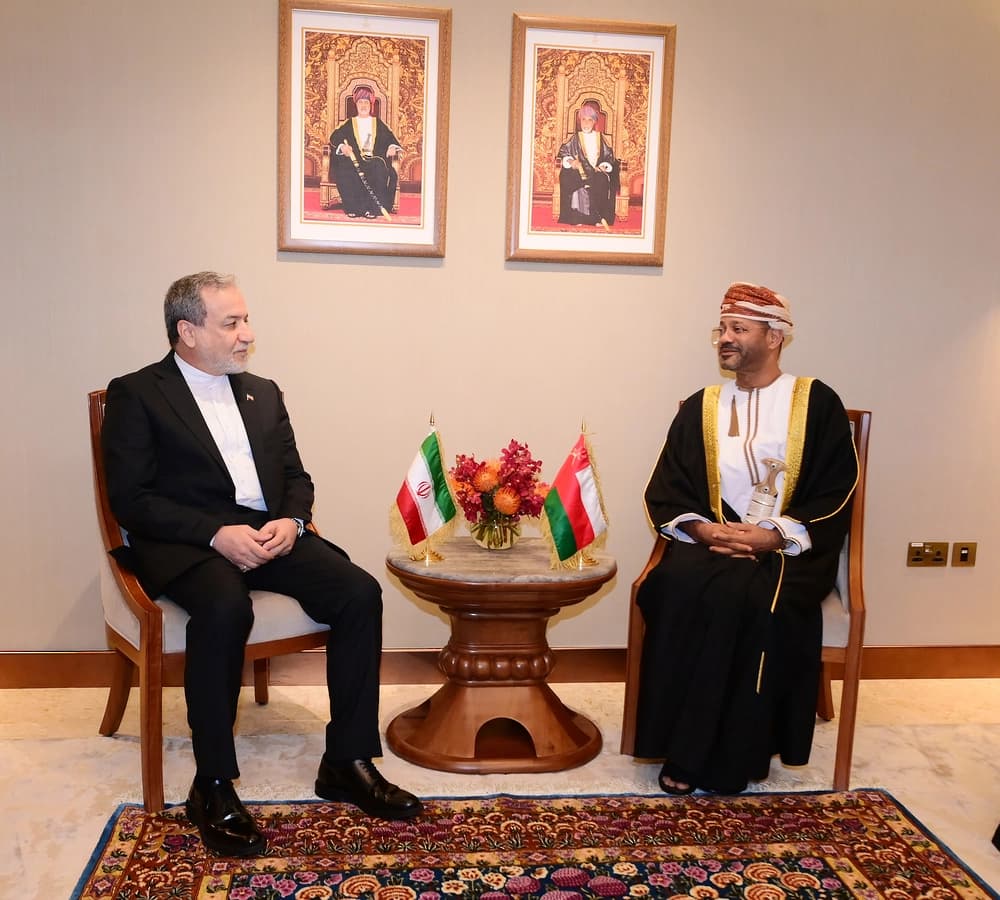
Amid the tensions, Iranian Foreign Minister Abbas Araghchi met his Omani counterpart Badr bin Hamad al-Busaidi in Muscat on Tuesday to discuss diplomatic efforts to prevent further escalation, according to Iranian and Omani media.
According to the Omani News Agency, the ministers emphasized protecting “maritime corridors, maintaining international shipping and trade, and reopening channels for dialogue and negotiations.”
Oman has played a mediating role between Tehran and Washington, with security arrangements in the Strait of Hormuz remaining a major obstacle to ending the conflict.