
ERBIL, Kurdistan Region - At least five Kurdish prisoners were executed, 64 Kurds arrested, and 23 others received death sentences or prison terms in Iran during October, according to a monthly report released Wednesday by the Hengaw Organization for Human Rights.
The watchdog said two Kurdish prisoners received death sentences, while 21 others were handed prison terms totaling 67 years and 15 days, in addition to 10 years of suspended imprisonment. One of those sentenced also received 31 lashes.
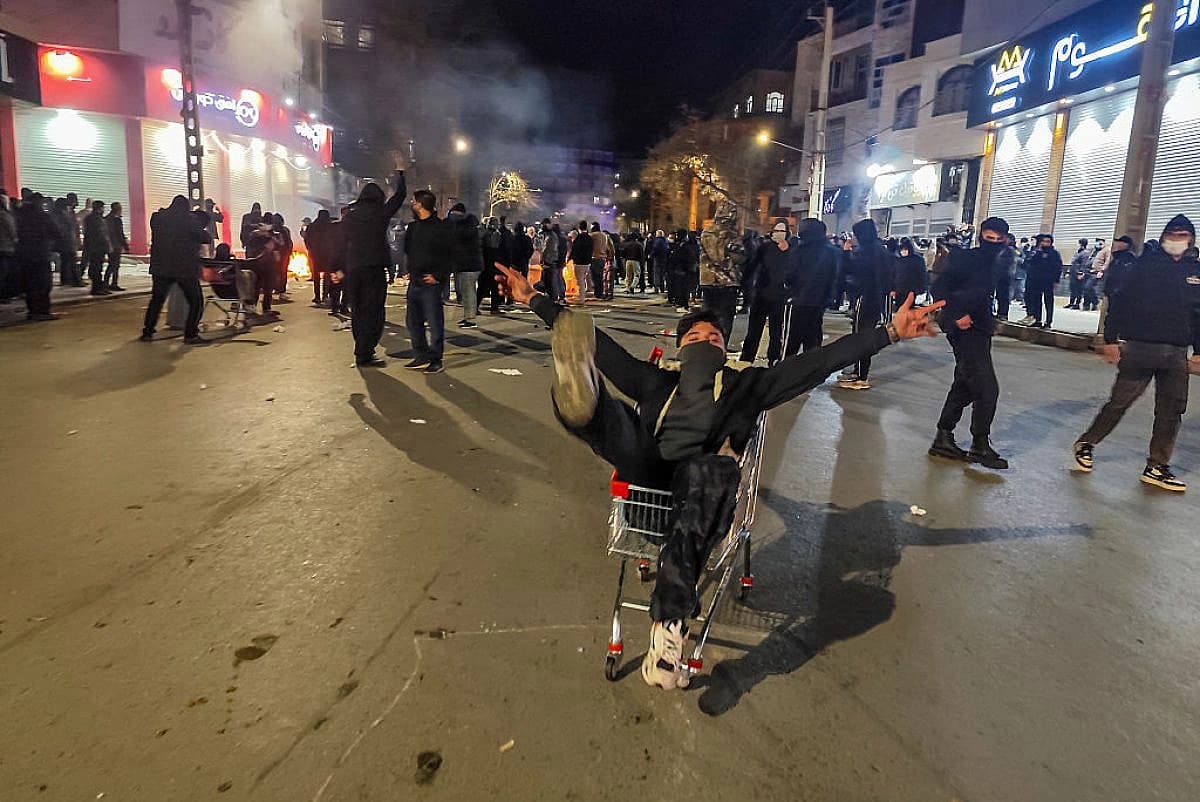
The reports come as Iran has faced mounting international scrutiny over its human rights record following a deadly crackdown on nationwide anti-government protests that began in December 2025. A UN fact-finding mission reported in September that Iranian authorities had carried out mass killings, arbitrary detentions, and torture, with some violations amounting to crimes against humanity. UN experts have also warned of escalating persecution of ethnic minorities, particularly Kurds and Baluch, including arbitrary arrests, enforced disappearances, and executions.
Of the 64 Kurds arrested by Iranian security forces, eight were women and six were children, Hengaw said. The highest numbers were recorded in Iran's western Kurdistan province, with 27 arrests, and neighboring West Azerbaijan province, with 25. Eight others were arrested in Ilam province, two in Kermanshah, and one each in Tehran and North Khorasan.
The findings come amid continued concerns over Iran's treatment of political prisoners and ethnic minorities. According to Hengaw's separate nationwide reports, Iranian authorities executed at least 85 prisoners in October, a 25 percent increase from September, while Kurds accounted for 64 of the 124 arrests the organization documented across the country.
Of the five Kurdish prisoners executed, two had been convicted of drug-related offenses and three of premeditated murder, Hengaw reported.
Among those receiving death sentences was Kurdish political prisoner Varisheh Moradi from Sanandaj.
According to the Kurdistan Human Rights Network (KHRN), Branch 15 of Tehran's Islamic Revolutionary Court sentenced Moradi to death for a second time around mid-October, after Iran's Supreme Court overturned an earlier ruling against her. She was convicted on charges of membership in an "armed insurgent group."
Beyond arrests and judicial sentences, Hengaw documented the shooting and injury of Kurdish kolbar Ali Mashhouri by Iranian border guards near Baneh. Kolbars are cross-border porters who transport goods through mountainous areas along Iran's western Kurdish frontier (Rojhelat), often to earn a living.
The watchdog also recorded four cases of femicide involving Kurdish women in October, including one killing it classified as motivated by so-called honor. Its separate report on women's rights documented at least 23 femicides across Iran during the month, alongside the arrests of 16 women activists, at least eight of whom were Kurdish.
In September, Hengaw recorded five Kurdish executions, 70 arrests, and 13 individuals sentenced to death or imprisonment. While documented arrests declined slightly, the number of Kurds receiving judicial sentences rose.
In a separate monthly report published Tuesday, KHRN documented at least two executions, 44 cases of detention, arrest or imprisonment, and five individuals sentenced to death or prison terms during October.
The organization said its figures reflected cases verified through its own sources and reporting mechanisms and did not represent every violation committed during the month.
KHRN also reported extensive deployments of Islamic Revolutionary Guard Corps (IRGC) personnel and military equipment in Kurdish areas, including shelling and drone strikes in the Shaho Mountains of western Iran.
"By mid-October, its forces were subjecting parts of the mountains near Daleh Marz in Sarvabad County to heavy shelling and drone attacks, including strikes with one-way attack drones," KHRN said, adding that IRGC restricted access to parts of the mountain for five days in early October.
Meanwhile, Norway-based Iran Human Rights (IHRNGO) reported Tuesday that at least 77 people were executed nationwide in October, including two Kurds and 10 Baluch prisoners. It said only 13 of those executions were officially announced, and that its documented total for the first ten months of 2026 had reached 691.
"In the first ten months of 2026, IHRNGO has recorded 691 executions, including three men who were under the age of 18 at the time of arrest, 23 women, 28 foreign nationals and 123 ethnic minorities," IHRNGO said.
The watchdog also said 36 protesters, including 34 from the nationwide January protests and two from the late 2022 "women, life, freedom" protests, were among those executed.
The different figures the monitoring organizations reported reflect their independently documented cases and verification methods, highlighting the difficulty to obtain comprehensive statistics on executions and detentions in Iran.
In another development, Hengaw reported Wednesday that Iranian political prisoner and social media activist Amirhossein Mousavi had been sentenced to death for "corruption on earth" and an additional five years in prison for "insulting religious sanctities" over his online activities. His lawyer confirmed the death sentence, according to the watchdog.