
Erbil, Kurdistan Region – Iran’s foreign ministry summoned Norway’s ambassador on Sunday to protest what it described as Oslo’s failure to stop unauthorized Starlink terminals in Iran.
Mohammad Hassaninejad, director-general for International Peace and Security at Iran’s foreign ministry, summoned ambassador Paul BjørnstadIranian and handed him a formal protest note, according to Iran’s semi-official Tasnim news agency.
Hassaninejad accused Norway of failing to meet its obligations as the notifying administration for satellite network filings used by Starlink, saying Tehran had repeatedly asked Oslo to act against Starlink terminals operating without Iranian authorization.
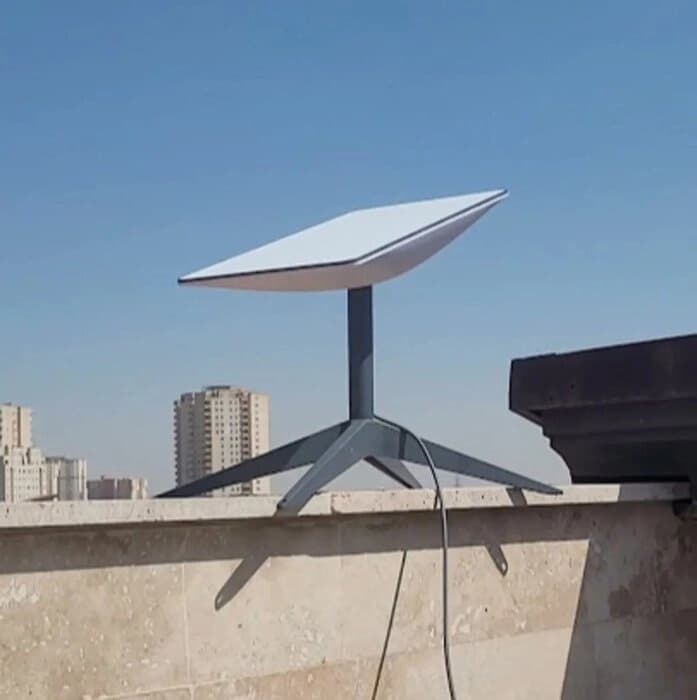
Starlink has become increasingly important for Iranians seeking to bypass government internet restrictions during periods of unrest and war. Iranian authorities have tightened their crackdown on the satellite service in recent months, seizing hundreds of terminals and arresting users and alleged smugglers.
Iran’s complaint against Norway comes as the latter is the notifying and registering administration for the Starlink satellite network at the International Telecommunication Union (ITU).
Iran’s authorities have become anxious about the spread of Starlink in the country as Iran faces an economic meltdown under sanctions and war, with intelligence services increasingly concerned about another bout of unrest similar to the January protests.
Iranian intelligence services have described the use of alternative internet technologies that bypass state-imposed internet shutdowns, particularly Starlink satellite systems, as a form of espionage or “collaboration with hostile states.”
Iran says Norway, as the country that registered the Starlink network with the ITU, is required under decisions by the organization’s Radio Regulations Board to take steps to prevent unauthorized Starlink transmissions in Iran. Hassaninejad said Norway had taken no actions despite repeated Iranian requests.
Around 10 percent of Iran’s internet traffic is estimated to be bypassing official gateways, including through Starlink, following the January protests, during which authorities imposed a digital blackout that lasted for 88 days before a partial restoration at the end of May.
There were warnings inside Iran against prolonging the digital blackout amid concerns that Iranian users would migrate to more reliable alternatives such as SpaceX’s Starlink.
“Starlink is no longer merely a potential concern; it has become a ‘reality.’ During the recent war and tensions, its use expanded, and we could see its effects and footprint on the country’s network,” Behzad Akbari, CEO of the Telecommunication Infrastructure Company, said when asked about Starlink use in Iran on September 14.
“Starlink’s share of the country’s total traffic is not a significant figure. The estimate of ‘one terabit per second’ that was mentioned was merely an approximation. In reality, no one has the exact figure, and only SpaceX itself knows the precise volume of usage by Iranian users,” he added.
There are currently more than 11,000 active Starlink satellites in low-Earth orbit, providing internet access to more than 12 million users across 160 countries.
Many people in Iran have been detained in recent months for possessing Starlink terminals or using internet services provided through them. Some of those detained over possession of Starlink equipment have died in suspicious circumstances in detention, according to Amnesty International.
The head of Iran’s Economic Security Police said on August 23 that his forces had seized 997 Starlink terminals between March and July. A total of 163 people were arrested in connection with the cases, while 15 vehicles carrying Starlink equipment were impounded.
“Combating the smuggling of satellite equipment and identifying entry routes and trafficking networks remains a serious priority for the police,” Brigadier General Hossein Rahimi said.
Rahimi said most of the equipment entered Iran through its western and northwestern borders, including from Azerbaijan and the Kurdistan Region, as well as through southern maritime routes from Qatar, the United Arab Emirates and Oman.