
ERBIL, Kurdistan Region - Iranian intelligence forces arrested a Kurdish opposition party member and transferred him to an unknown location, the party’s official media reported on Monday. A local source told Rudaw that dozens of vehicles carrying plainclothes intelligence officers surrounded the area before the operation.
The Kurdistan Free Life Party (PJAK), a Kurdish opposition group in Iran, reported on Monday that one of its members, Sirwan Habibi, from Sina (Sanandaj), was arrested on Wednesday by Ministry of Intelligence forces in the city of Kamyaran in the predominantly Kurdish-majority region of western Iran (Rojhelat).
The party framed the incident as “a premeditated conspiracy and an ambush” and maintained that Habibi was unarmed during the time of his arrest, adding that he had traveled to Kamyaran solely to carry out organizational duties after which he was beaten and tortured before being transferred to an undisclosed location.
The incident comes against the backdrop of Iranian authorities’ escalation of crackdowns on activists, opposition groups, civilians, cultural figures, and those deemed a “security” threat in efforts to maintain a tight grip on dissidents by way of arbitrary arrests, abductions, lack of transparency or due process, and extrajudicial killings, in efforts to communicate a message of deterrence.
Rights groups such as France-based Kurdistan Human Rights Network (KHRN) and Norway-based Hengaw Organization for Human Rights, citing local eyewitnesses, likewise both reported Monday that dozens of vehicles belonging to the ministry of intelligence surrounded the area before one of the vehicles rammed Habibi’s motorcycle at high speed, knocking him to the ground.
The rights groups reported security forces beating and arresting Habibi before taking him to an undisclosed location and firing shots into the air to disperse civilians who gathered at the scene. According to the groups, authorities have provided no information about Habibi’s fate or whereabouts despite his family’s attempts.
This recent arrest comes as tensions between Tehran and Iranian Kurdish opposition groups escalate on both sides of the Iran-Iraq border.
Following an attack in late August, semi-official Fars news agency cited “security experts” emphasizing the need for “decisive and continued action by security forces against outlaws, members of the illegal PJAK group, and others disrupting security in the region” as “essential to maintaining the safety and security of the local population.”
While Iran has repeatedly launched missiles and drones on other groups, such as Komala and the Kurdistan Democratic Party of Iran (KDPI) near the Kurdistan Region capital of Erbil, the attacks follow a wider campaign against dissidents that has intensified since the US-Iran war began in late February.
Iran has for decades confronted Kurdish opposition groups operating inside the country as well as bases in Iraq’s Kurdistan Region. Major Iranian Kurdish parties established camps there in the early 1980s after being banned in Iran, with continued pressure from Tehran over time pushing some groups even deeper into the Kurdistan Region.
The most recent attack occurred early Monday as three missiles struck a camp housing families of members of the Iranian Kurdish opposition group Komala in the vicinity of Sulaimani province’s Zirgwez in the Kurdistan Region, causing material damage but no casualties, a group official said.
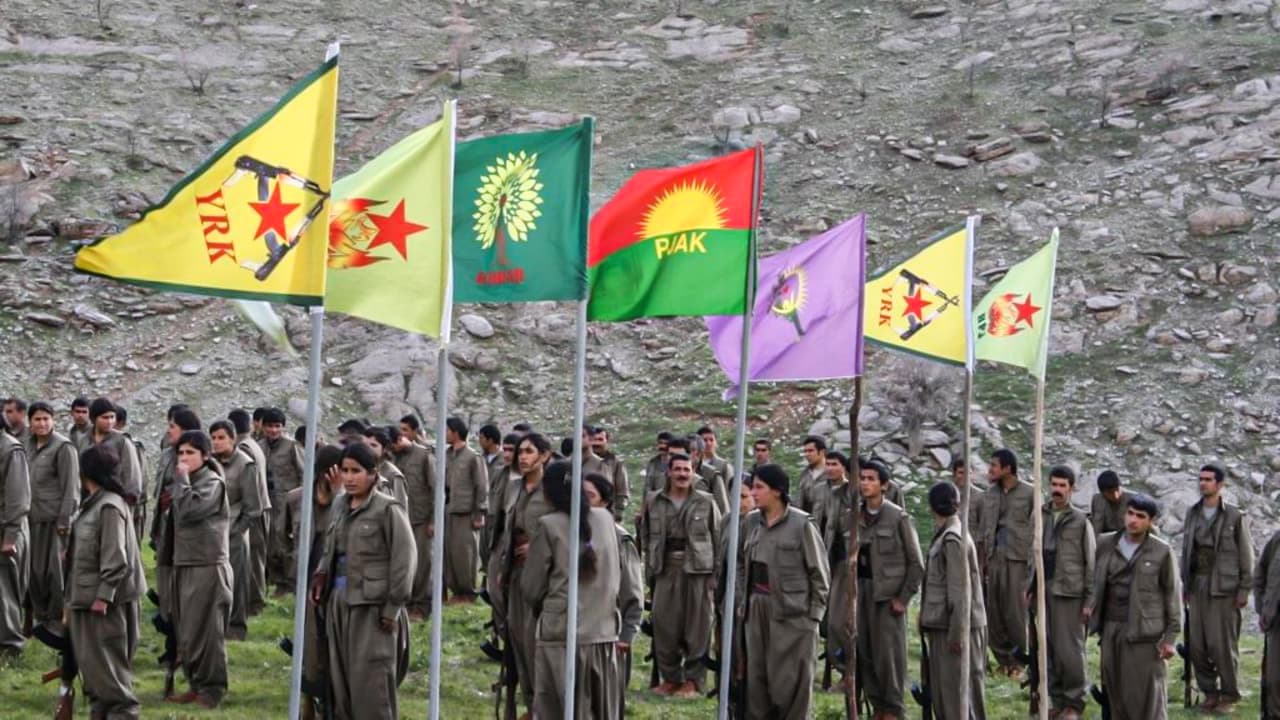
PJAK maintains mobile guerrilla units in Kurdish areas of western and northwestern Iran through its armed wing, the East Kurdistan Defense Units (YRK), which has conducted operations and clashed with Iranian security forces.
In July, four PJAK members were killed in an armed clash with Iranian security forces in Baneh in Iran’s Kurdistan province, according to Iranian state and semi-official media. The incident followed earlier clashes involving PJAK in western Iran and came amid intensified Iranian military operations against Kurdish opposition groups inside Iran and across the border in the Kurdistan Region.
Iran’s Kurdish-majority region has been the site of ongoing attacks and heavy security presence. Iranian authorities have frequently accused Kurdish opposition groups of armed activity and links to Kurdish movements outside Iran, while rights groups have documented arrests and other security crackdowns targeting Kurdish activists and opposition members.