
ERBIL, Kurdistan Region - Iran is increasing its efforts to identify, threaten and punish dissidents abroad, expanding a campaign that has targeted opposition activists and journalists outside the country for decades.
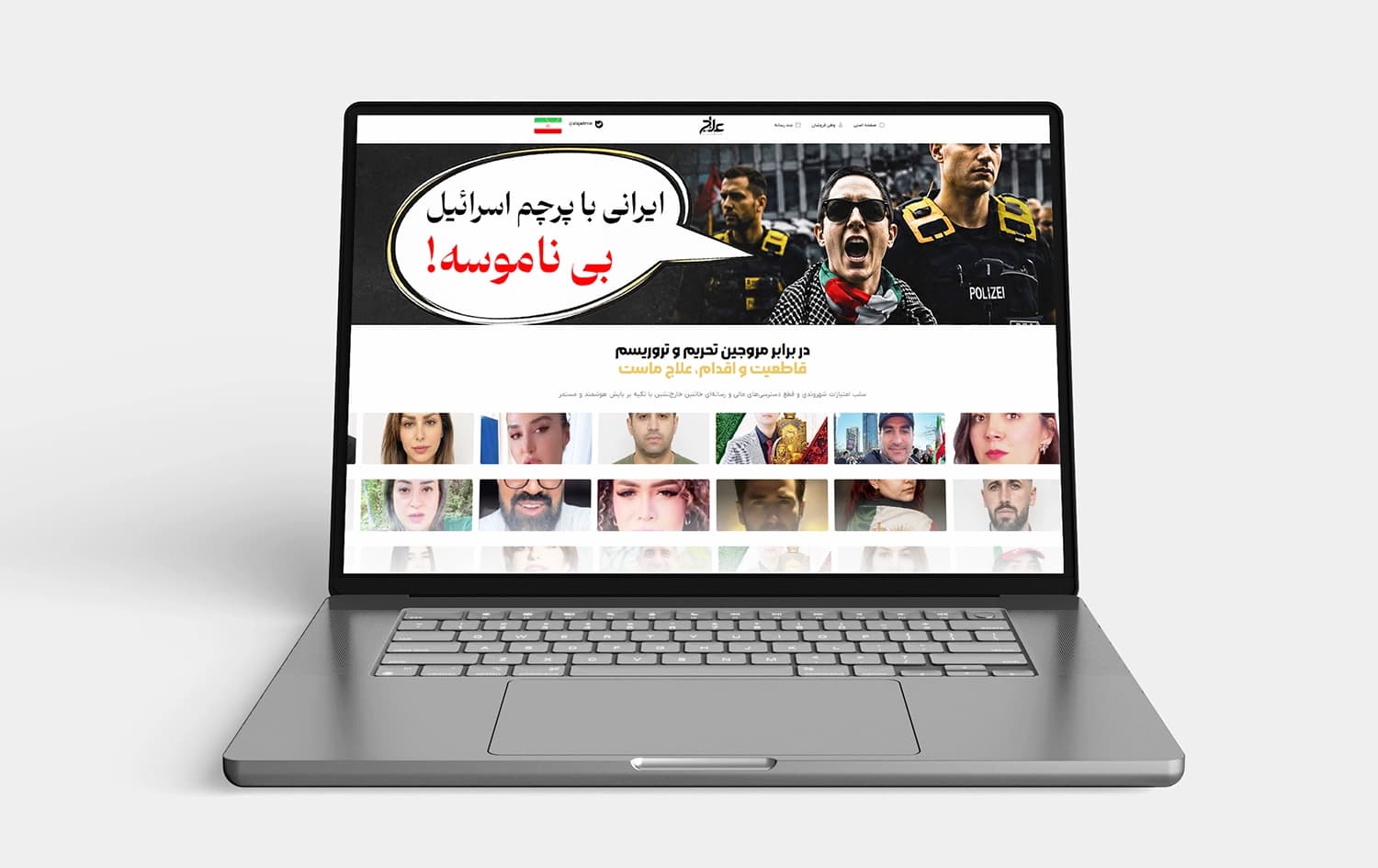
A newly launched monitoring and intelligence platform called Alaj has announced that it has begun identifying Iranians abroad accused of “betrayal,” separatism, promoting sanctions or supporting military action against the Islamic Republic.
This new campaign comes as officials in Tehran have threatened that anyone inside the country who tries to protest against the state would be dealt with as an agent of the enemy and dealt with swiftly and follows a precedent of Iranian security forces having killed thousands of protesters in January during weeks of nationwide anti government demonstrations.
Alaj’s stated mission is to protect national security and Iranian interests against what it deems “anti-national,” separatist and pro-sanctions networks. The platform says those identified could lose citizenship-related privileges and face restrictions on financial and media access. It is also asking Iranians to submit information on dissidents through its website and messaging channels, promising to keep informants’ identities confidential.
The website states that 1,600 people have been identified as traitors, publishing the profile of 60 individuals, including their posts on social media.
The list includes film director Marjane Satrapi, whose graphic novel Persepolis won international acclaim. Its film adaptation won the Jury Prize at the Cannes Film Festival in 2007.
State media published the news about the initiative on Monday, weeks after Brigadier General Abolfazl Shekarchi, spokesperson for Iran’s armed forces, openly threatened Persian-language journalists working abroad, including BBC Persian, Radio Farda and Iran International.
“These media outlets are considered soldiers of Zionism and criminal America, and they can even be placed on military target lists, because in our view, these are not media outlets,” Shekarchi said, according to Iranian state-aligned Press TV.
Iran has pursued dissidents since the revolution of 1979 and carried out multiple assassinations of journalists, artists, political leaders and others in Europe and across the world.
In July, two Romanian men working for Tehran were sentenced to 12 and eight years each for stabbing Pouria Zeraati, a journalist working for London-based Iran International.
Kurdish leader Abdul Rahman Ghassemlou was assassinated in July 1989 as he sat with so-called Iranian negotiators in a flat in Vienna to talk about the Kurdish people’s rights in Iran. Another high profile dissident was journalist Ruhollah Zam, who had refugee status in France and ran the Amad News Telegram channel. He travelled to Iraq in October 2019, where he was abducted by Islamic Revolutionary Guard Corps (IRGC) intelligence agents and taken back to Iran where he was hanged after a sham trial on December 12, 2020.
Iranian Kurdish parties have long accused Tehran of carrying out assassinations in the Kurdistan Region. In 2014, Kurdish opposition officials told Rudaw that nearly 300 party members and activists had been assassinated in the Region since the early 1990s.
Pressure has intensified since the US and Israel launched an aerial bombing campaign in Iran on February 28 striking thousands of targets. IRGC and Iran regular army (Artesh) launched over one thousand missiles and drones targeting the Kurdistan Region, including the bases belonging to Kurdish opposition groups.
Iranian state and IRGC-linked media have also increasingly published the names and photographs of Kurdish dissidents and activists abroad. IRGC-affiliated Fars News has published a list of Kurdish dissidents wanted by Iran and said Tehran is seeking their arrest through international mechanisms, including Interpol.
The latest initiative, Alaj, comes as the Iran police chief Ahmad Reza Radan said on Sunday that the country is in “war time conditions” and anyone who challenged the state inside the country would be deemed an enemy of the state.