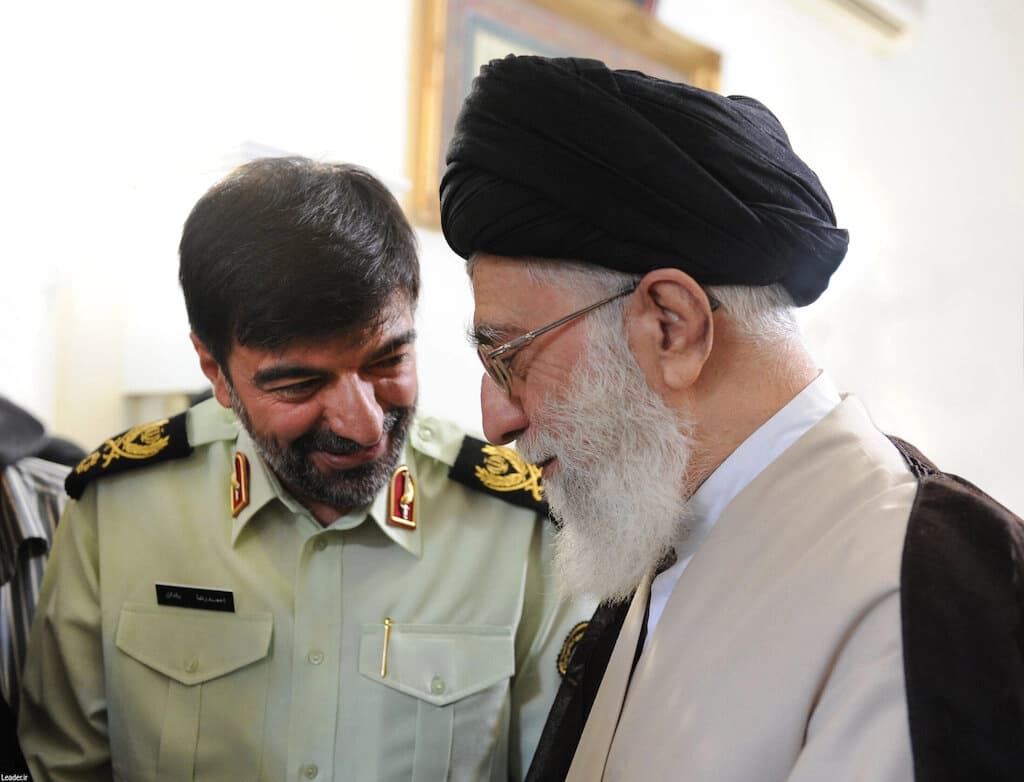

ERBIL, Kurdistan Region - Iran’s police chief has warned that security forces will show “no leniency” toward anyone who challenges the state in public spaces, days before a planned general strike called by Kurdish opposition groups to mark the fourth anniversary of the death in custody of Kurdish woman Zhina (Mahsa) Amini.
The warning by police chief Ahmad Reza Radan comes as Iran faces deep economic strain, with the cost of living soaring and the national currency in freefall amid government mismanagement, sanctions and war.
“We are in wartime conditions, and if anyone, at the invitation of the enemy, tries to create insecurity inside the country, we will deal with them. We will show no leniency in this regard,” Radan said in a televised interview with state media on Sunday night.
Radan, a former Islamic Revolutionary Guard Corps (IRGC) commander, has played key roles in suppressing protests over the past two decades, including in 2009 and 2022. He is sanctioned by the United States and European Union over human rights abuses.
His warning comes a day after an alliance of major Iranian Kurdish opposition parties called for a general strike across Kurdish-majority areas of western Iran on September 16, the fourth anniversary of Amini’s death after she was detained by Iran’s morality police.
Her death sparked nationwide protests in 2022 under the slogan “Woman, Life, Freedom.”
Radan was appointed head of Iran’s police for the second time by then-Supreme Leader Ali Khamenei in January 2023, months after the protest movement shook the Islamic Republic. Hundreds of protesters were killed during the crackdown by the IRGC, Basij militia and police Special Units, according to rights groups.
Radan also confirmed that the state has mobilized its support base since early March in an effort to deter protests and maintain control of public spaces.
He said authorities believed opponents had planned unrest around the final Wednesday of the Iranian year in March, but claimed the effort failed because government supporters were mobilized.
“One of the enemy’s detailed plans was that on the last Wednesday of the year, they would create a model similar to the January incidents, but this did not happen, and one of the main reasons for this was the presence of the people,” Radan claimed.
Iranian authorities have used similar tactics around previous anniversaries of the 2022 protests. During the first anniversary of Amini’s death in 2023, security forces were heavily deployed across Kurdish cities, while shopkeepers were warned against joining strikes.
Radan added that police are working alongside the IRGC and the regular army, known as the Artesh, to maintain security.
“We have around 30 million Jan-Fada [those ready to sacrifice their lives] who are no longer merely responders, but act pre-emptively; meaning that before anyone wants to enter the scene, they are ready to confront the threat,” he said.