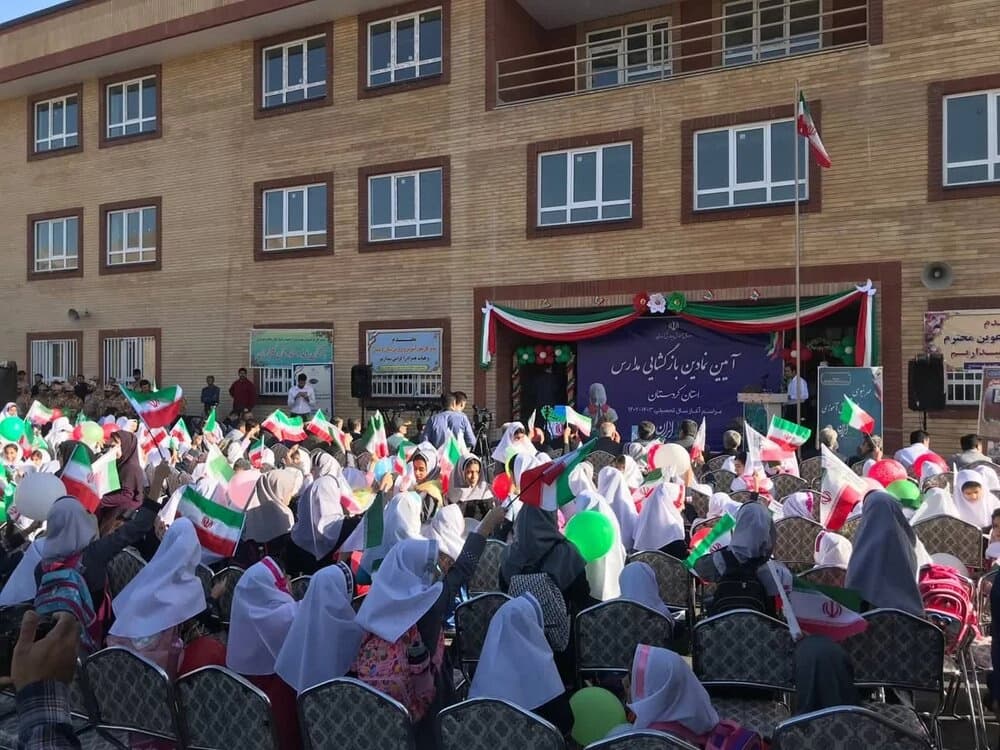

ERBIL, Kurdistan Region - Iran has expelled more than a quarter million “undocumented” school children over the past year, most of them Afghans, as Tehran intensifies a campaign that has uprooted hundreds of thousands of people who had built their lives in the country for decades.
“The number of foreign-national students has fallen from 600,000 to 320,000, while consumption of essential goods and indicators related to public services have also declined significantly,” Nader Yarahmadi, head of the Interior Ministry’s Center for Foreign Nationals and Immigrants Affairs, as cited by semi-official ISNA news agency.
“In a metropolis such as Tehran, where a large number of foreign nationals live, this reduction is clearly evident,” he said, adding that the number of undocumented migrants have fallen from 6.1 million to less than five million.
While Iranian authorities say those affected are predominantly undocumented migrants, with Afghans making up by far the largest foreign population in the country, the number of Afghan migrants removed from Iran appears to be more than what the authorities in Tehran claim.
In July 2025, Afghanistan’s Ministry of Refugees and Repatriation said that around 1.2 million Afghans had been forcibly returned from Iran in the first four months of the current solar year, urging Tehran not to treat Afghans as “criminals.”
Many Afghan families who fled fighting in their homeland have resided in Iran for decades with their children born and raised in Iran.
The expulsions of Afghan migrants have intensified in the past year following the first aerial campaign carried out by the US and Israel in which Israeli intelligence infiltration inside Iran played a critical role.
Iranian officials and some in the media raised alarm during the war that the migrant community may have helped Israeli intelligence.
Iranian authorities detained large numbers of foreign nationals during security sweeps, while some were investigated over alleged espionage links. Authorities even detained Europeans and British nationals on charges of spying for Israel.
Afghans began arriving in Iran in large numbers after the upheaval that followed the 1979 Iranian revolution and the Soviet invasion of Afghanistan later that year. Successive waves followed during Afghanistan’s civil war, the Taliban’s first period in power in the 1990s, and the US-led war after 2001.
Another major wave occurred after the US withdrew from the country and Taliban returned to Kabul in August 2021. Many fled economic collapse, insecurity and Taliban brutal rule, particularly women, former officials and people who feared persecution.
The relationship between Tehran and the Taliban has since shifted considerably.
While Iran and the Taliban nearly went to war in 1998 after Taliban forces killed Iranian diplomats in Mazar-i-Sharif, today the two sides maintain extensive political, commercial and security contacts despite Tehran not formally recognizing the Taliban government.
Afghans who once fled Taliban rule into Iran are therefore increasingly finding themselves pushed back into a country now governed by the same movement.
The top official in charge of Iran policy in Afghanistan said last year that Tehran was pursuing a path of sealing the border completely.
“This issue is now on the agenda and needs to be pursued in a more systematic and legally regulated manner. Undocumented foreign nationals must leave; this is the right policy,” Hassan Kazemo Qomi said. “We need to control the borders, and the Islamic Republic is pursuing a physical border-sealing project in this regard.”