
ERBIL, Kurdistan Region - Iran says it is in no hurry to reopen the Strait of Hormuz despite reaching an understanding with Oman, as a US naval blockade squeezes Iranian trade and a worsening gasoline crisis pushes Tehran towards another politically sensitive fuel price increase.
Deputy Foreign Minister Kazem Gharibabadi said Tehran and Muscat had agreed on arrangements governing passage through the strategic waterway, but stressed that the understanding would not be implemented until Washington fulfills what Iran says are its obligations under the Islamabad memorandum - which was signed in June, but its provisions held for only about a month.
“We have made it clear that whenever the conditions and obligations placed on the United States are implemented, the Islamic Republic of Iran is also ready to take its measures regarding the Strait of Hormuz,” Gharibabadi told the state-run IRNA. “If they do nothing, naturally the Islamic Republic of Iran is in no hurry to open the Strait of Hormuz.”
He said Iran had completed the necessary preparations with Oman but would not “take the lead” in implementing its commitments while Washington remained outside the agreement.
Gharibabadi also insisted that the strait was “completely closed” and that no vessel could cross without Iranian coordination.
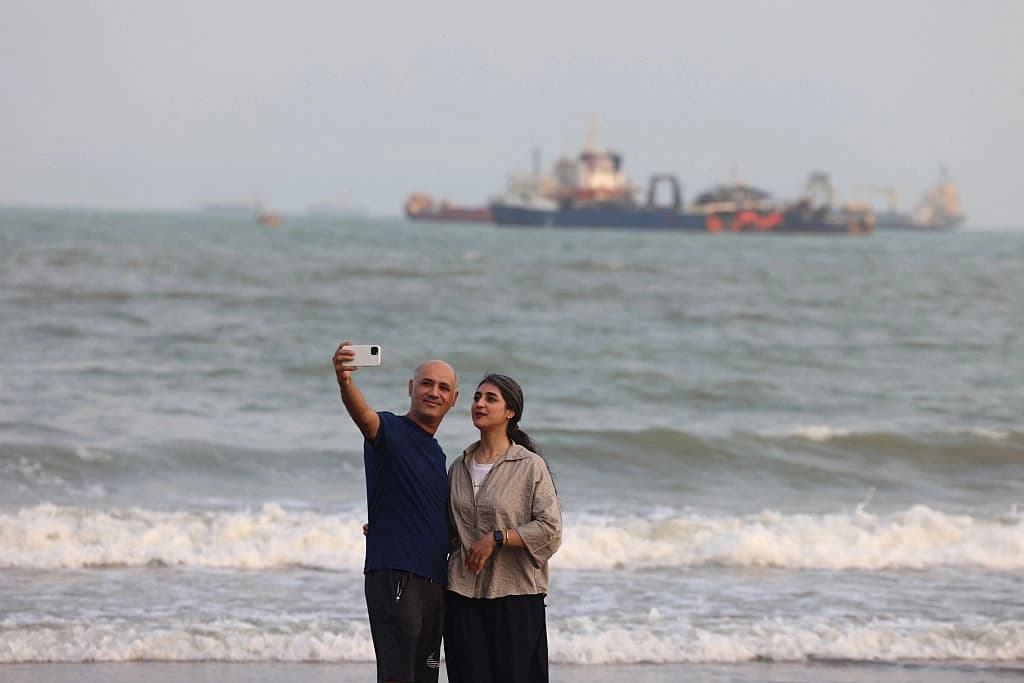
That assertion, however, is increasingly at odds with shipping volumes. Goldman Sachs estimates that crude and petroleum product flows through Hormuz have recovered to around two-thirds of pre-war levels, reaching 15 million to 16 million barrels a day.
The recovery suggests Washington has succeeded in keeping much of the Gulf’s non-Iranian trade moving while maintaining its blockade on vessels travelling to and from Iranian ports.
The consequences are increasingly visible inside Iran, where long queues have formed at fuel stations.
Siamak Tavousi, an official at the National Iranian Oil Refining and Distribution Company, said average daily gasoline consumption had risen from 138 million liters earlier this month to around 145 million liters over the past week.
He said increased demand, combined with damage to storage and fuel logistics infrastructure in Tehran, had slowed supplies to some stations and caused queues.
President Masoud Pezeshkian has directly linked the pressure to the war and blocked trade routes.
“The route is closed and goods are not entering. Gasoline is one of those goods,” he said on state television on Friday.
Pezeshkian added that government revenues had also fallen and that even if the route reopened, Tehran would still need the money to purchase additional gasoline.
He said the government intends to double the third-tier gasoline price from 5,000 tomans ($0.025) to 10,000 tomans ($0.05) per liter, although the timing has yet to be finalised.
The 5,000-toman tier was introduced in December 2025, when gasoline purchased through station cards rose from 3,000 tomans, while the subsidised 1,500- and 3,000-toman tiers remained unchanged.
Fuel prices remain politically sensitive in Iran. In November 2019, the government raised the price of rationed gasoline from 1,000 to 1,500 tomans, triggering nationwide protests and a deadly crackdown. Amnesty International documented 321 people killed by security forces.
Even Gholam-Ali Haddad-Adel, a prominent conservative from the opposing political camp, has backed the need for action.
“The government now has to make decisions about gasoline, and this chaotic situation surrounding gasoline must change,” he said, while warning that Iranians should not again wake up to a sudden price increase as they did in 2019.