
ERBIL, Kurdistan Region - Iranian authorities on Sunday executed another man detained during January’s nationwide anti-government protests, the judiciary said, as Tehran increasingly turns to executions amid mounting domestic and economic pressure.
Majid Adineh was hanged after being convicted by a Revolutionary Court in Karaj for allegedly acting on behalf of the US, Israel and groups hostile to the Islamic Republic.
Adineh was arrested by the intelligence arm of the Islamic Revolutionary Guard Corps (IRGC) on January 9 in Mohammadshahr, near Karaj, west of Tehran, during protests that began over worsening economic conditions and quickly spread across the country.
Human rights groups have repeatedly accused Iran of denying defendants due process and using coerced confessions in national security cases.
“I am alarmed by the rise in executions and death sentences issued in Iran since March and that capital punishment continues to be used to instill fear among the population and suppress dissent,” UN High Commissioner for Human Rights Volker Turk said earlier this month.
United Nations experts have also warned about the escalating number of executions in Iran, particularly among ethnic minorities such as Kurds and Baluchis, who are disproportionately affected by death sentences on broadly defined security charges.
The judiciary claimed that Adineh was carrying a handgun, ammunition, stun guns, tear gas, a chainsaw and petrol when he was detained. It said his death sentence and an order confiscating his property were later upheld by the Supreme Court.
Adineh is among more than 50 political prisoners, including three dozen protesters, who have been executed since March 17, according to the UN estimates, as authorities increasingly use the death penalty to suppress dissent and spread fear.
The authorities have also used execution in public squares across Iran as a way of preventing the public from defying the regime. In July, Amir Hossein Safari and Abolfazl Sepahi, both detained during the January protests, were publicly hanged in Alikhani Square in the central city of Isfahan. Several others linked to the same case have also been executed.
Human rights groups have repeatedly accused Iran of denying defendants due process and using torture to extract confessions in national security cases.
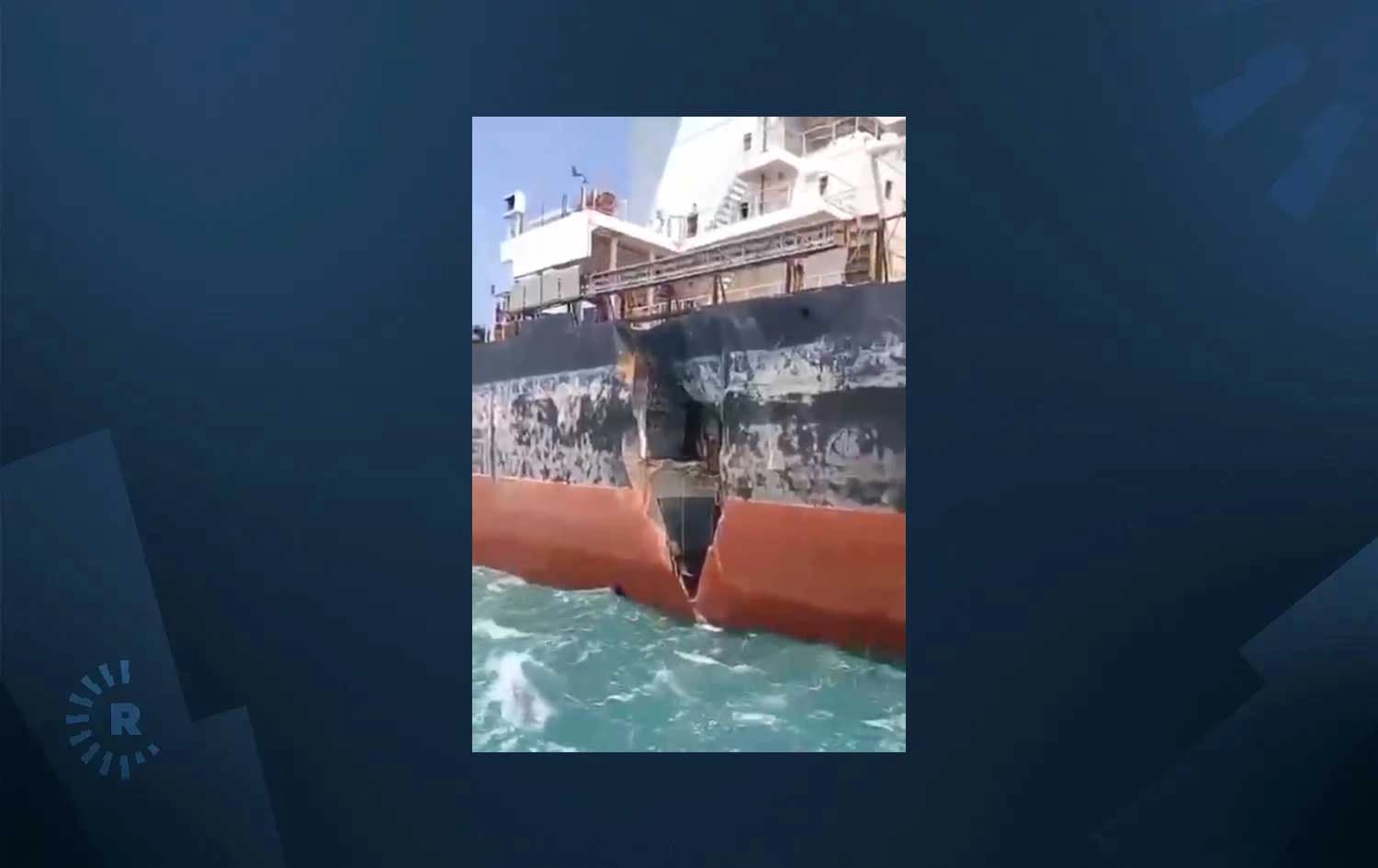
The accelerating executions come as Iran faces a deepening economic crisis after months of conflict with the United States and a US naval blockade aimed at choking off Tehran’s oil revenues.
Iranian crude exports through the Strait of Hormuz have effectively stopped, while overall shipments have fallen sharply from pre-war levels.
President Masoud Pezeshkian and parliament speaker Mohammad Bagher Ghalibaf, Tehran’s top negotiator, have both warned publicly about the country’s deteriorating economic situation.
Ghalibaf recently said that military strength alone would not be enough if Iran could not maintain economic circulation, growth and domestic production.
Hardliners, however, continue to argue for confrontation.
Mohsen Rezaei, the newly appointed secretary of the Supreme National Security Council and a former IRGC commander, said Saturday night that the Strait of Hormuz would remain closed or restricted until Washington accepted Tehran’s demands.
The latest execution comes seven months after economic hardship helped trigger the January protests, with many of those detained during the unrest still facing lengthy prison terms or death sentences.