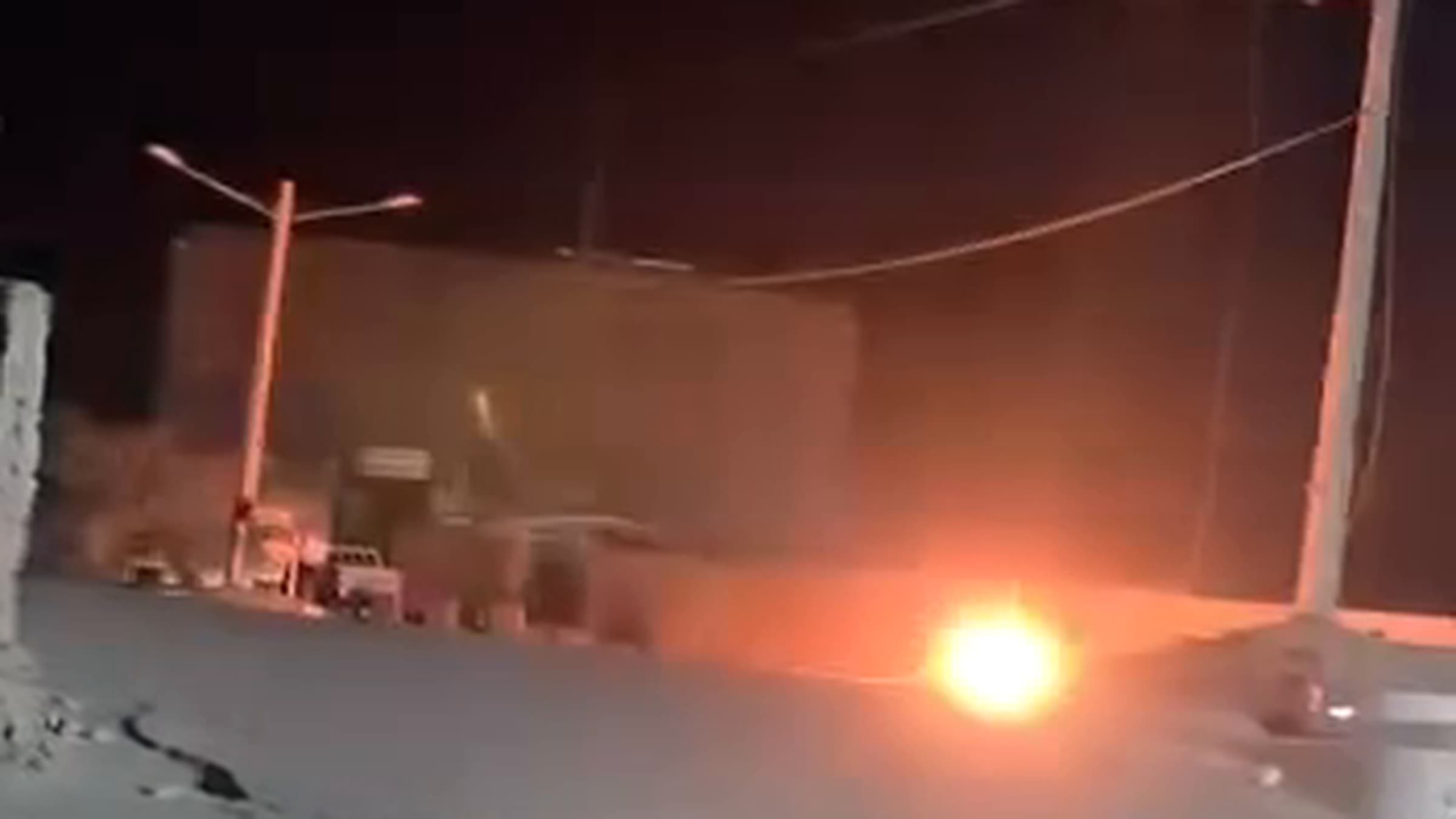
ERBIL, Kurdistan Region - Iran, including its Kurdish-majority western areas (Rojhelat), is experiencing power outages this week, locals told Rudaw, voicing concern that blackouts - currently running up to three hours a day - could extend due to high power demand during the summer compounded by the impact of the ongoing military escalation between Tehran and Washington.
The blackouts are affecting local shop owners in Rojhelat, Yousif Khazralani, a bakery owner in West Azarbaijan province's Kurdish city of Bokan, told Rudaw’s Sina Soma.
"There are times when we have bread inside the oven, and during that single minute when the power goes out, we suffer a loss of one million tomans [around $5]," Khazralani said.
Extreme summer temperatures reaching 41 degrees celsius pushed national grid demand above 75,500 megawatts, Tehran's energy ministry reported last week.
Days earlier, Mohammad Allahdad, head of Iran's national electric power generation, transmission, and distribution company, said the national grid had lost approximately 4,200 megawatts of available capacity due to infrastructure damage and technical stress.
Domestic cooling systems are among the key drivers behind the surging consumption, says Wasim Maroufi, a butcher, who told Rudaw that people are trying to work around the problem.
"I make four or five kilograms of minced meat - since it's ground up, its color naturally changes over time and it dries out. Out of fear [of losing customers], we're forced to keep mincing it; but if we don't, customers come and leave empty-handed," he said.
Last week, Iran's energy ministry urged citizens to shut off air conditioners for one hour during peak hours as part of efforts to conserve electricity and redirect power from the grid to communities in Iran's south whose energy infrastructure was targeted by American forces.
The ministry added that the measure is intended "to help ensure a stable electricity supply in the southern provinces, which are currently facing extreme heat and attacks on power infrastructure,” without providing specific details regarding the power plants or transmission lines damaged in the ongoing escalation between Iran and the United States.
The US Central Command (CENTCOM) said Monday that its forces had "successfully completed the ninth consecutive night of strikes against Iran" on Sunday.
"CENTCOM assets targeted Iranian military command centers, air defense and coastal surveillance sites, maritime capabilities, missile and drone launch sites, and communications networks," the Command said, noting that the strikes aim to “further diminish Iran's ability to attack commercial vessels and civilian mariners transiting the Strait of Hormuz.”
The Command’s statement notably did not provide details regarding power plants or transmission lines being targeted.
However, Iran's foreign ministry on Thursday accused the US of carrying out "aggressive attacks" on its civilian infrastructure.
The escalation comes as Tehran and Washington have been locked in continuous strikes and counterstrikes for nearly 14 days.
This comes weeks after Iran and the US signed the Islamabad Memorandum of Understanding in mid-June, which established a halt to military operations on all fronts and reopened the Strait of Hormuz to commercial shipping.
Despite the escalation, Iranian foreign ministry Spokesperson Esmaeil Baghaei confirmed that indirect diplomatic contacts between Iran and the US have resumed in recent days through "certain mediators."
RELATED: Iran confirms indirect diplomatic contacts with US amid military escalation