

ERBIL, Kurdistan Region - Iran tripled its drone production capacity during its war with the US and Israel that began in late February, despite continued attacks during the six-week-long conflict, Iran’s defense minister said on Saturday, according to state media.
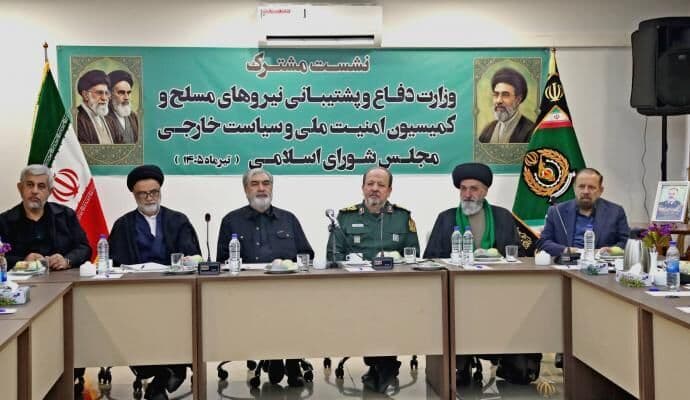
Acting Defence Minister Majid Ebn al-Reza, speaking during a meeting with lawmakers on Saturday, said that Iran's defense production continued without interruption throughout the conflict despite the loss of senior military commanders.
"The country's drone production capacity increased threefold," state media IRNA cited him as saying, describing the conflict as a “catalyst” for advancing Iran's defense technologies.
The US and Israel launched a large-scale military campaign against Iran on February 28, targeting nuclear facilities, military sites and senior commanders. In response, Iran carried out thousands of drone and missile strikes across the Middle East, targeting alleged US assets and launching retaliatory attacks against Israel.
The fighting lasted six weeks before a ceasefire took effect on April 8, which was followed by a 60-day memorandum of understanding signed on June 17, under which Washington and Tehran agreed to hold talks on Iran's nuclear program and regional security.
The truce has since largely collapsed, with the US and Iran exchanging new strikes in recent days while negotiations continue.
Reza claimed Israel and the US entered the war with the backing of "150 leading technology companies" and advanced military equipment, but “failed” to achieve their objectives “due to the guidance of the Commander-in-Chief and the support of the people.”
The comments follow similar remarks by Reza earlier this month, when he said Iran could negotiate while maintaining military readiness and warned Tehran would respond militarily to any US "breach of commitments" during the talks.
Iran has repeatedly claimed it expanded domestic military production following the conflict.
In April, senior Iranian military commander Alireza Sheikh said the country's drone production had increased tenfold in the previous seven months compared with the period before an earlier war, describing drones as a key element of Iran's military strategy, according to IRNA.
The remarks of Tehran’s military officials come as Iran and the US have been locked in an escalation marked by intermittent exchanges since Tuesday. Following Iran’s attack on three commercial vessels transiting the Strait of Hormuz, the US Central Command (CENTCOM) struck upwards of 170 targets in southern Iran on Wednesday and Thursday. In response, Iran targeted alleged US assets in Jordan, Kuwait and Bahrain.
US President Donald Trump said Saturday that at least 1,000 missiles are aimed at Iran and would be fired if Tehran carries out threats to assassinate him.
A thousand “Missiles are Locked and Loaded and aimed at the Islamic Republic of Iran, with thousands of more to immediately follow, should the Iranian Government act on its threat, pronounced in many corners of the Globe, to assassinate, or attempt to assassinate, the sitting President of the United States of America, in this case, ME!" Trump wrote on his Truth Social platform.
Meanwhile, Iran's supreme leader on Saturday vowed revenge for the US-Israeli killing of his father and predecessor, hours after President Donald Trump's threats.
"Vengeance is the will of our nation and must inevitably be carried out," Iran’s Supreme Leader Mojtaba Khamenei said in a written message.
Amid mounting threats, mediators have sought to revive diplomacy. Iran's Tasnim news agency reported on Friday that a Qatari delegation was v


