
ERBIL, Kurdistan Region - The head of the UN nuclear watchdog on Friday stressed the need for a "very strong" verification system to ensure Iran does not develop nuclear weapons, as Tehran and Washington move forward with negotiations aimed at ending months of conflict.
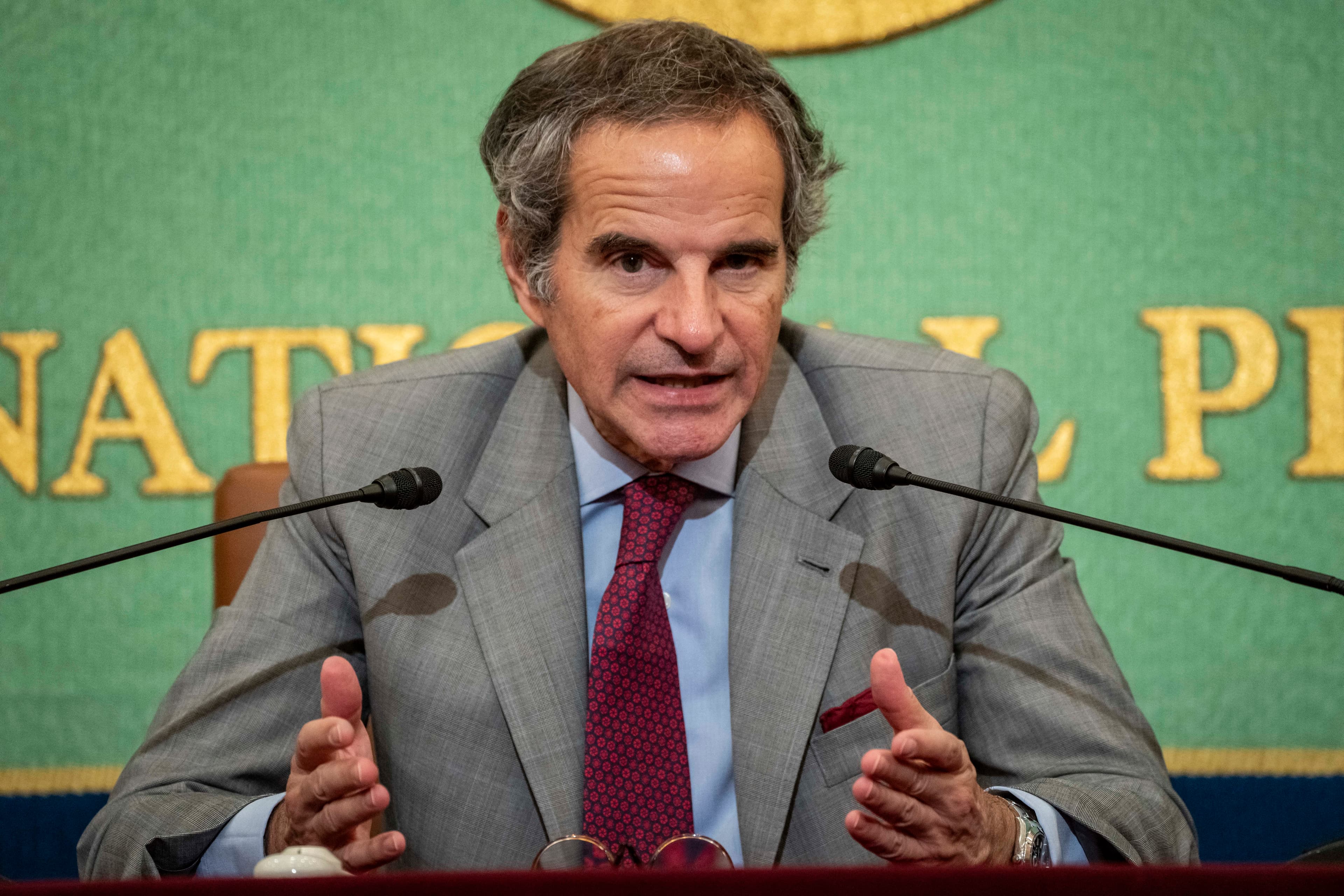
Speaking to reporters in Japan, International Atomic Energy Agency (IAEA) Director General Rafael Grossi said the goal of the emerging US-Iran agreement was to prevent Iran from acquiring nuclear weapons, but emphasized that international monitoring would be essential.
"I think the objective of this agreement is to ensure that there is no development of nuclear weapons in Iran. The government of Iran has affirmed quite clearly that this is not their intention. But of course, intentions are not enough, Grossi said, adding that: "We have to have a very strong verification system in place."
His remarks come after the first high-level talks between the United States and Iran concluded in Burgenstock, Switzerland, on Sunday, where mediators announced "encouraging progress" and agreed on a roadmap toward a final agreement within 60 days. Technical negotiations are set to begin immediately under the new framework.
The negotiations come amid efforts to secure a final agreement to end the Iran-US war following the Pakistan-brokered ceasefire reached on April 11, which sought to halt attacks involving the United States, Israel and Iran that erupted in late February.
Grossi said discussions between the IAEA and Iran regarding oversight of Tehran's nuclear activities had only just begun.
"Last weekend we were in Burgenstock in Switzerland where initial conversations have taken place. So I expect this work to pick up soon," he said.
The IAEA has not inspected Iran's enriched uranium stockpile since Tehran suspended cooperation with the agency following Israeli and US strikes in June 2025. Before the US-Iran war, the watchdog estimated Iran possessed about 440 kilograms of uranium enriched to 60 percent, close to weapons-grade levels.
Under the preliminary understanding reached between Tehran and Washington, the stockpile is expected to be downblended under IAEA supervision, although Grossi has also said shipping the material out of Iran remains a possible alternative.
Iran has consistently denied seeking nuclear weapons, insisting its nuclear program is intended solely for peaceful civilian purposes.
On Tuesday, US President Donald Trump claimed that Iran has agreed to extensive future nuclear inspections, stating that negotiations between Washington and Tehran are progressing.
Trump posted on his Truth Social platform that Iran had accepted “the highest level of nuclear inspections long into the future,” describing it as a move to ensure what he called “nuclear honesty.” He stated, “if they did not agree to this, there would be no further negotiations!”