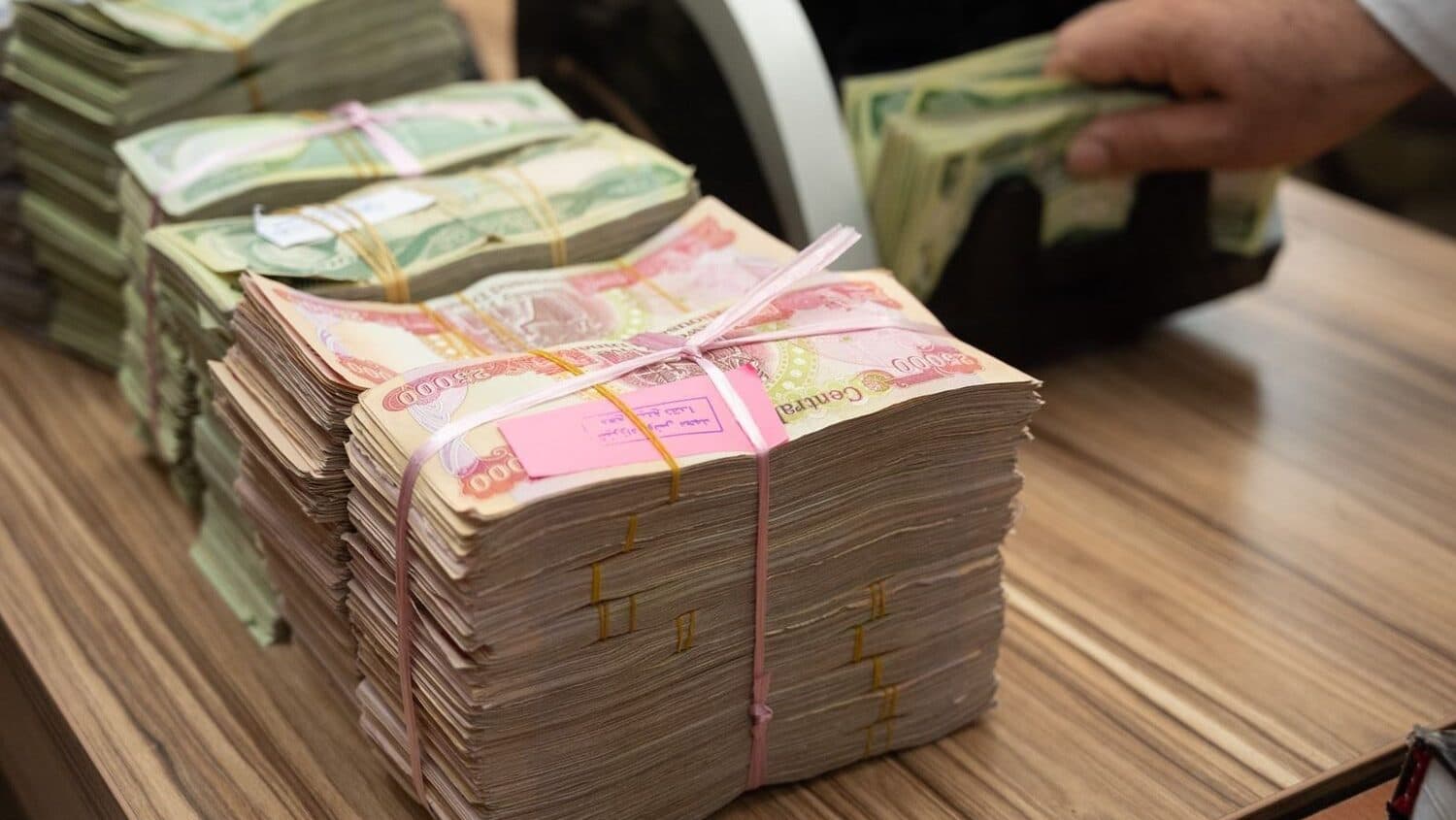

ERBIL, Kurdistan Region - Iraq recorded a budget deficit of nearly 11 trillion Iraqi dinars ($8.3 billion) in the first four months of the year, marking a 68 percent increase compared to the same period last year, according to newly published data from the Central Bank of Iraq (CBI).
The CBI's monthly revenue and expenditure tables showed a revenue of 80.6 trillion dinars ($61.5 billion) between January and April, while actual spending reached 91.6 trillion dinars ($70 billion), resulting in a deficit of 10.9 trillion dinars ($8.3 billion).
The increase in the deficit during March and April coincided with heightened regional tensions following the launch of the US-Israeli military campaign against Iran in late February, which disrupted oil exports after the Strait of Hormuz - the route used for nearly 90 percent of Iraq's crude exports - was closed.
Investment spending accounted for 39.5 trillion dinars ($30.2 billion) during the period, while investment revenue totaled just 43.6 trillion dinars ($33.3 billion).
Current expenditure, which includes public sector salaries and other operating costs, reached 87.6 trillion dinars ($67 billion), compared with the current revenue of 80.2 trillion dinars ($61.2 billion).
April recorded the largest monthly deficit at 6.6 trillion dinars ($5 billion), while January saw the lowest shortfall at 339 billion dinars ($259 million).
This quarter’s deficit is 7.4 trillion dinars ($5.6 billion) greater than last year's figure of 3.5 trillion dinars ($2.7 billion), marking an increase of 68 percent.
The Central Bank's long-term data also showed that Iraq generated more than 3.47 quadrillion dinars ($2.6 trillion) in revenue between 2004 and February 2026, equivalent to roughly $2.6 trillion ($2 billion).
Over the same period, government expenditure totaled 3.29 quadrillion dinars ($2.5 trillion), leaving cumulative revenue credit of 181 trillion dinars ($138 billion).
Hastyar Qadir contributed to this report.