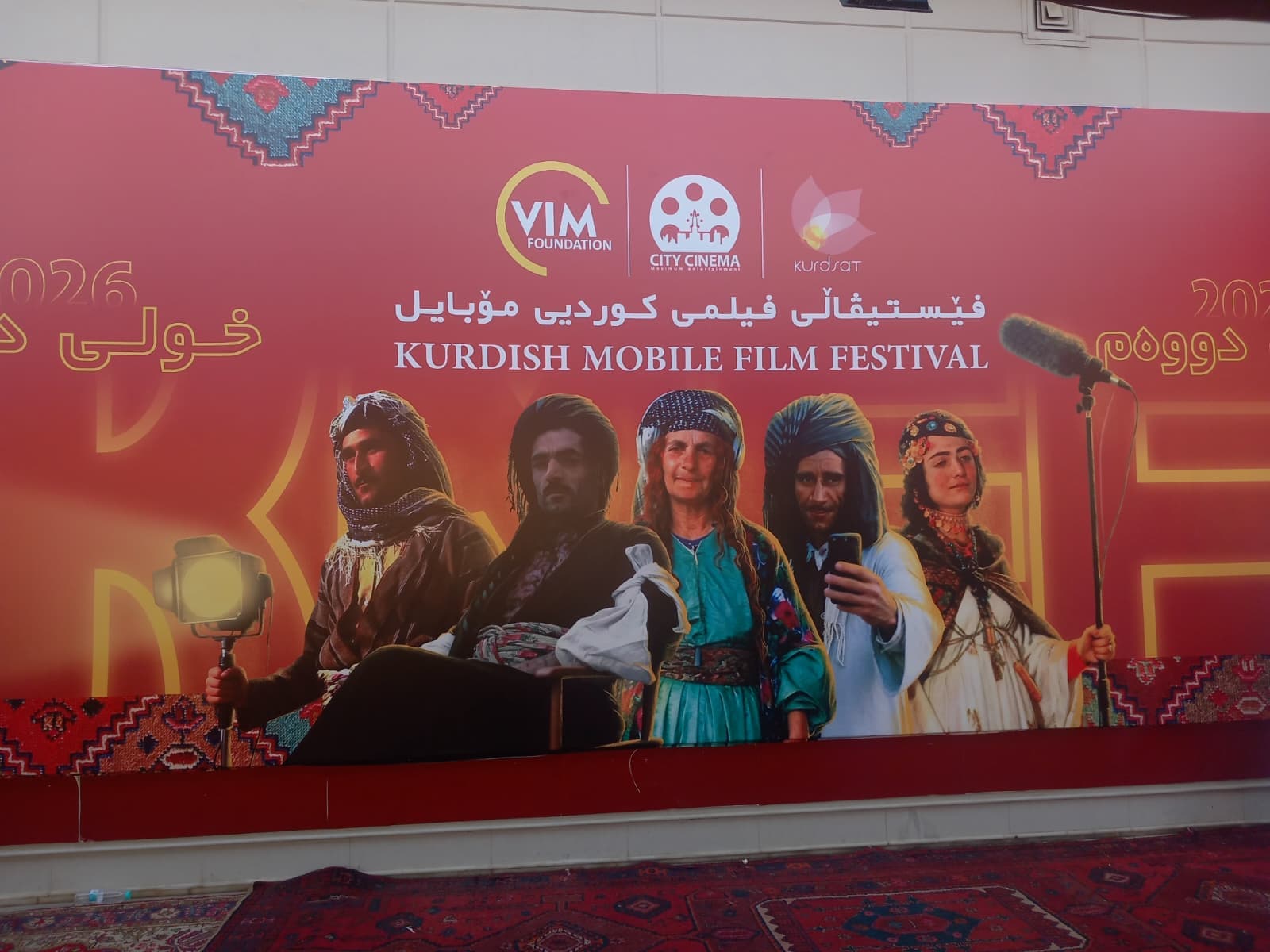

ERBIL, Kurdistan Region - Audiences flocked to Sulaimani's City Cinema Friday and Saturday evening, surpassing the theater’s 300-seater capacity in excitement and anticipation of the Kurdish Mobile Film Festival. Hosted by the Vim Foundation, one of the city’s thriving artistic and cultural hubs, the festival featured a compilation of 15 films produced by artists from all four Kurdish provinces who had made the finalists.
“The city [itself] is called the capital of Kurdish culture” making it a natural venue for people to visit, said Vim Foundation employee Zheera Jalal, telling Rudaw on Saturday that “yesterday, after the films finished there were still so many people waiting outside,” noting that the unexpected high turn-out prompted a second screening.
The Vim Foundation serves as a nonprofit for youth-led cultural and artistic programs. The Film Festival was an idea born out of Vim Foundation President Lava Hikmat’s vision to merge Vim’s work of supporting youth employment and promoting the arts in a way that was “youth-centered.”
Among Vim’s community-based initiatives are master classes on film production and cinematic makeup, sculpture workshops, Startup Initiative program, environmental volunteer activities, as well as two of its most notable initiatives, Artfrosh, an art gallery featuring works from local artists, and Humans of Kurdistan, which publishes narratives from people hailing from all four Kurdish regions, all open to the public and free of charge. Born out of a “love” and “passion” to promote and nurture the arts among the city’s youth, Vim has been operating with a staff of 15 and a number of dedicated volunteers since its founding in 2019. Jalal told Rudaw that its artistic programs are “the biggest hubs for youth to be experimental” emphasizing the importance of its accessibility for all.
Entrants submitted films using their mobile phones to record 5-10 minutes of footage edited using computers. Jalal emphasized the ease of accessibility and low production costs, citing the project as a “budget friendly” endeavor in an effort to not let “financial barriers be effective against the talent that the youth has.”
Vim received around 200 short films from “all four regions of Kurdistan” with the majority from the Kurdistan region of Iraq, mainly Duhok, Sulaimani, Erbil and Halabja. A number of the community’s veteran artists served as jurors, nominating 15 out of the 200 for awards on the final day of the festival.
The festival featured awards in 11 categories, including Best Film, Directing, Screenplay, Acting, Editing, Music, and the highly-coveted Vim Media Award, through which Vim Foundation will cover the full production costs of the winner’s next film, supporting emerging talent and contributing to the growth of Kurdish cinema.
“This festival is important for youth to show their films,” said Paiwand Kawa, one of the producers in the festival whose film was titled, “Dwene la Amroda” (yesterday in Today) alongside director Honia Ishaq.
“These kinds of festivals are important to have in all of Kurdistan, including Sulaimani and Erbil.”
While a majority of entrants were young-career professionals already in the film industry, the festival attracted submissions from students from the Fine Arts Institute and Fine Arts college in Sulaimani, said Jalal, noting that the youngest participants were high-school aged students.
Jalal said he views the film festival as “continuing what Sulaimani is famous for,” stating that he hopes “that these initiatives help build an independent cinema industry free from bipartisan and investor's influence.”
“As for Vim,” he said, “the foundation wants to be at the forefront of making positive changes to the arts atmospheres and help artists to make careers out of their artworks and become self-sustainable.”