ERBIL, Kurdistan Region - Mandaeans, an ethno-religious minority whose presence dates back to antiquity, celebrate their new year, Dehwa Rabba (the big holiday) across Iraq and the Kurdistan Region amid demographic decline and waning representation nationwide.
"On this occasion, I extend my warm congratulations to the Iraqi people in general, and to Kurdistan in particular, which has become an example of peaceful coexistence among all nationalities and religions,” former Iraqi member of parliament, Khalid al-Rumi told Rudaw on Friday, adding that he’s “praying to the Almighty that it returns to our beloved country while it enjoys security and prosperity."
Mandaeans are a distinct ethno-religious group with historical roots tracing back to Mesopotamia and the Jordan Valley, traditionally centered around the Tigris and Euphrates rivers in southern Iraq and southwestern Iran. Mandaeism is the oldest and the last surviving Gnostic religion from antiquity.
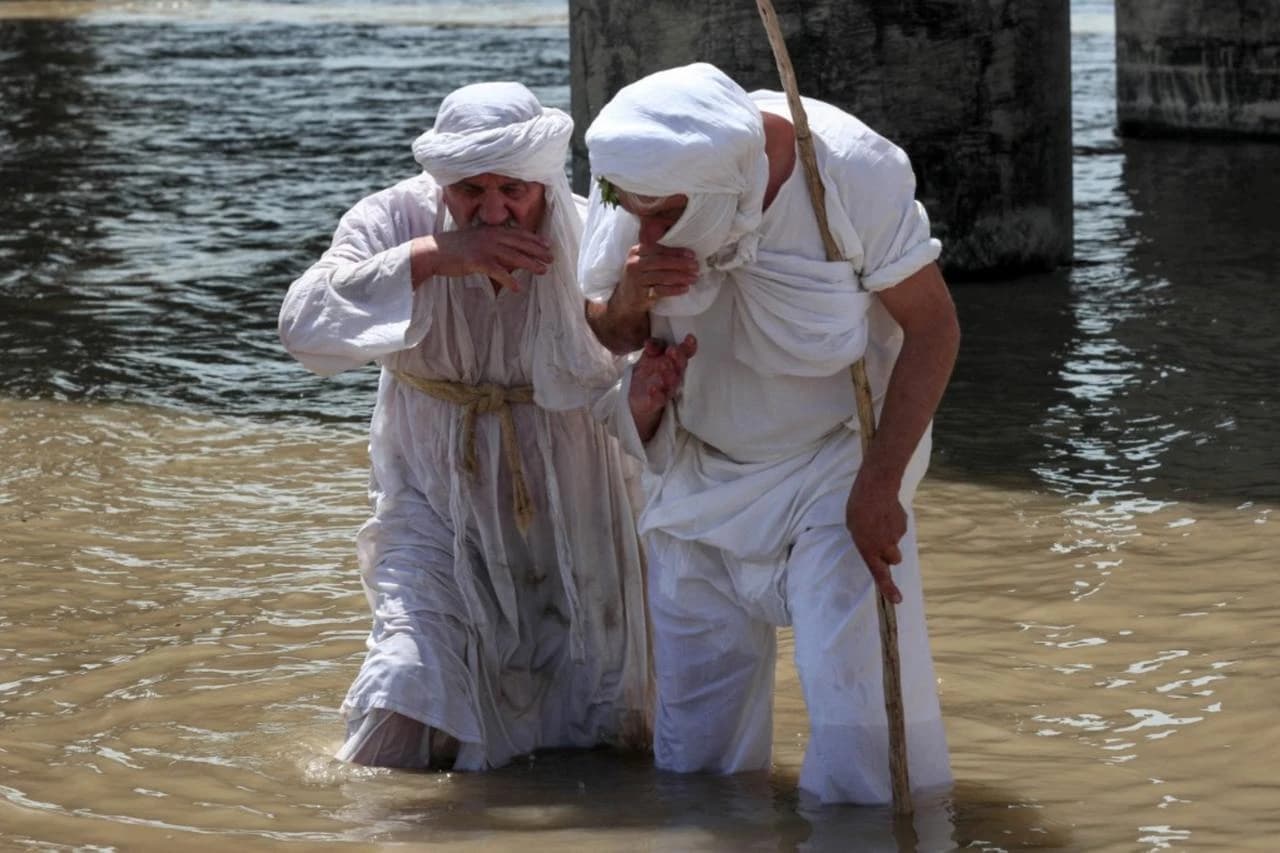
Dehwa Raba involves thousands of adherents participating in full-body immersions in flowing water led by the Rish Ama, the highest-ranking priest or patriarch in Mandaeism.
“Although there are several Rish Ama’s in different countries, Satar Jabbar al-Hlu is considered the Rish Ama for Iraq” Rumi noted.
The Mandaean population in Iraq has experienced a major collapse over the last two decades. It is estimated that only 3,000 to 10,000 Mandaeans remain in Iraq and the Kurdistan Region, a massive drop from their pre-2003 population, estimated between 60,000 and 75,000.
Today, much of the community lives in a global diaspora primarily in Australia, Sweden, and the United States, following severe persecution in their homelands.
The Mandaean Human Rights Group reported to the United Nations High Commissioner for Human Rights in 2015 that “90% of Mandaeans are now refugees."
“The Mandaean community has therefore suffered more displacement than other groups in Iraqi society,” the report added.