


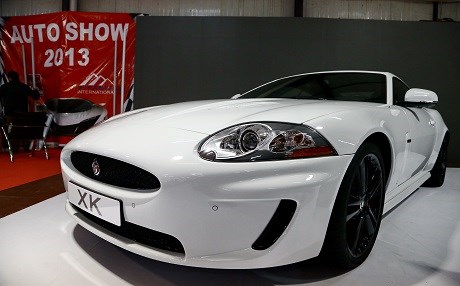
ERBIL, Kurdistan Region – Interest in the latest car models has plummeted in the Kurdistan Region due to the ongoing economic crisis, said a sales manager of a motor company, leading to some car companies reducing their imports of the latest cars into the region.
According to figures produced by the Kurdish Ministry of Trade and Industry, imports of cars, agricultural equipment, and building materials steadily increased from 2004 to 2014. But interest in the latest cars started to diminish in 2015 due to the economic crisis, as many in the region faced reduced wages and dwindling income.
Sales at Niva, a Ford dealership, have continuously declined over the past two years.
“Interest in the latest cars is generally down in the Kurdistan Region due to the economic crisis and reduced wages, leading to a big slump in car sales in the region as a whole, especially for companies importing a specific brand of car,” said Rezhin Basil, executive manager of Niva.
“Sales are down by 70% in our company compared to the sales rate we had before the region’s economic crisis. Before this crisis, 70% of our sales came from government departments, organizations, small car companies, factories and investors whose activities have since either stopped or diminished.”
Car companies were regularly importing and exhibiting the latest cars in the Kurdistan Region before it was hit by the economic crisis. But these imports have dramatically waned.
Saz Company, a sub-branch of Sardar Company for Toyota vehicles, has so far imported only small quantities of one model out of the seven Toyota models released this year.
“Our sales are not as down as other companies due to the big interest the people of Kurdistan have in Toyota vehicles. Our sales fell by 30% last year compared to the slip we had in 2014. They are down by 20% this year compared to last year,” said Choman Ibrahim, Saz Company’s sales manager. “In general, our sales are in total down by 50%.”
Saz Company was previously selling cars via monthly installments in coordination with local banking institutions. But they have now suspended this offer.
“The local banking institutions were vying in the past to get a contract with us to sell cars through them in the way of monthly installments. But most of them have now pulled out from these dealings as they faced difficulties with people failing to pay their debts. That is why we have sold no cars by installments this year,” Ibrahim said.
People are also less interested in swapping their cars with the latest car brands. As a result, car prices have fallen. For example, the price of a Toyota Hilux was $31,000 in 2015. It has fallen to $28,000 in 2016, despite having more features in the newer release.
Business is better in Iraq than in the Kurdistan Region.
“The rate of our sales in Iraq is higher than it is in the Kurdistan Region where our highest sales rate has been in Erbil,” Ibrahim said, adding, “We still have 2015 and 2016 models at our stores, which is why we have only imported Land Cruisers out of the 2017 Toyota models.”
According to statistics recorded by the Kurdistan Region’s General Directorate of Transportation, 169,628 new cars were registered in 2013 alone, bringing the total number of cars in Kurdistan to 1,163,972.
Registration of new vehicles has, however, fallen by 78% over the past three years. In the past 11 months, only 36,352 new cars have been registered, bringing the total number of cars in the Kurdistan Region to 1,385,487.
NIM, KIA Motors’ branch in Kurdistan, imported 100 cars of each of KIA’s 11 models in its first year. But they have imported just 3 cars of each model this year, some of which still remain unsold, said NIM’s sales manager.
“Our sales have fallen by 70%, owing to the economic crisis and the pullout of local banks from their support to car sales through installments,” Daria Wuria, NIM’s sales manager, told Rudaw.
NIM is currently facing the threat of closure. “We are under big pressure from KIA Motors. They say that they will end their partnership with us if sales continue to be down. That is why we have had to sell some of our cars for cheap,” Wuria added.
These companies import some vehicles on specific requests from individuals.
“Currently, interest is in cars with a reasonable price due to the economic crisis and diminished individual income. However, there is still interest in expensive cars. For example, in the middle of this year, we imported over 15 Ford Lincoln vehicles on demand from people. Each vehicle was for $72,000,” Basil explained.
According to figures produced by the Kurdish Ministry of Trade and Industry, imports of cars, agricultural equipment, and building materials steadily increased from 2004 to 2014. But interest in the latest cars started to diminish in 2015 due to the economic crisis, as many in the region faced reduced wages and dwindling income.
Sales at Niva, a Ford dealership, have continuously declined over the past two years.
“Interest in the latest cars is generally down in the Kurdistan Region due to the economic crisis and reduced wages, leading to a big slump in car sales in the region as a whole, especially for companies importing a specific brand of car,” said Rezhin Basil, executive manager of Niva.
“Sales are down by 70% in our company compared to the sales rate we had before the region’s economic crisis. Before this crisis, 70% of our sales came from government departments, organizations, small car companies, factories and investors whose activities have since either stopped or diminished.”
Car companies were regularly importing and exhibiting the latest cars in the Kurdistan Region before it was hit by the economic crisis. But these imports have dramatically waned.
Saz Company, a sub-branch of Sardar Company for Toyota vehicles, has so far imported only small quantities of one model out of the seven Toyota models released this year.
“Our sales are not as down as other companies due to the big interest the people of Kurdistan have in Toyota vehicles. Our sales fell by 30% last year compared to the slip we had in 2014. They are down by 20% this year compared to last year,” said Choman Ibrahim, Saz Company’s sales manager. “In general, our sales are in total down by 50%.”
Saz Company was previously selling cars via monthly installments in coordination with local banking institutions. But they have now suspended this offer.
“The local banking institutions were vying in the past to get a contract with us to sell cars through them in the way of monthly installments. But most of them have now pulled out from these dealings as they faced difficulties with people failing to pay their debts. That is why we have sold no cars by installments this year,” Ibrahim said.
People are also less interested in swapping their cars with the latest car brands. As a result, car prices have fallen. For example, the price of a Toyota Hilux was $31,000 in 2015. It has fallen to $28,000 in 2016, despite having more features in the newer release.
Business is better in Iraq than in the Kurdistan Region.
“The rate of our sales in Iraq is higher than it is in the Kurdistan Region where our highest sales rate has been in Erbil,” Ibrahim said, adding, “We still have 2015 and 2016 models at our stores, which is why we have only imported Land Cruisers out of the 2017 Toyota models.”
According to statistics recorded by the Kurdistan Region’s General Directorate of Transportation, 169,628 new cars were registered in 2013 alone, bringing the total number of cars in Kurdistan to 1,163,972.
Registration of new vehicles has, however, fallen by 78% over the past three years. In the past 11 months, only 36,352 new cars have been registered, bringing the total number of cars in the Kurdistan Region to 1,385,487.
NIM, KIA Motors’ branch in Kurdistan, imported 100 cars of each of KIA’s 11 models in its first year. But they have imported just 3 cars of each model this year, some of which still remain unsold, said NIM’s sales manager.
“Our sales have fallen by 70%, owing to the economic crisis and the pullout of local banks from their support to car sales through installments,” Daria Wuria, NIM’s sales manager, told Rudaw.
NIM is currently facing the threat of closure. “We are under big pressure from KIA Motors. They say that they will end their partnership with us if sales continue to be down. That is why we have had to sell some of our cars for cheap,” Wuria added.
These companies import some vehicles on specific requests from individuals.
“Currently, interest is in cars with a reasonable price due to the economic crisis and diminished individual income. However, there is still interest in expensive cars. For example, in the middle of this year, we imported over 15 Ford Lincoln vehicles on demand from people. Each vehicle was for $72,000,” Basil explained.
Comments
Rudaw moderates all comments submitted on our website. We welcome comments which are relevant to the article and encourage further discussion about the issues that matter to you. We also welcome constructive criticism about Rudaw.
To be approved for publication, however, your comments must meet our community guidelines.
We will not tolerate the following: profanity, threats, personal attacks, vulgarity, abuse (such as sexism, racism, homophobia or xenophobia), or commercial or personal promotion.
Comments that do not meet our guidelines will be rejected. Comments are not edited – they are either approved or rejected.
Post a comment