



Error occured during this request! Please try again later.
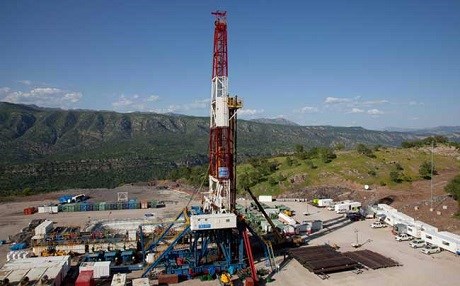
ERBIL, Kurdistan Region — A United Arab Emirates-listed energy company has reported a record monthly oil production level of over one million barrels in July 2019 at the Kurdistan Region’s Atrush oil field, following announcements of oil production and profit booms elsewhere in the Kurdistan Region by foreign companies.
The Abu Dhabi National Energy Company, known as TAQA, announced the “key milestone”
in production levels by its TAQA Iraq subsidiary in an August 21 press release.
“The current rate of gross production at the Atrush block is approximately 34,000 barrels of oil per day,” the statement said.
“The increase in production was largely due to new wells coming on stream and the impact of de-bottlenecking work over the past few months, which has increased the capacity of volumes handled by the production facility,” it added.
Atrush oil field, located 85 kilometers from Erbil, was discovered in 2011. Seventeen million barrels of oil have been produced at the site since its opening in July 2017.
TAQA is an Abu Dhabi-listed energy and water company operating in 11 countries. It holds a majority 47.4 percent share in Atrush alongside its partners - the Kurdistan Regional Government (KRG), General Exploration Partners, and Marathon.
TAQA’s production record follows a July 31 announcement by Norwegian oil and gas company DNO of a 20% increase in oil production levels at the Kurdistan Region’s two biggest internationally operated oil fields, Tawke and Peshkabir, in 2019.
Located near the Turkish border, the two fields produce some 3.8 million barrels of oil per month.
Dana Gas announced a 74 percent increase in Kurdistan Region revenue collection through the Pearl Petroleum consortium on July 27.
The KRG started its independent oil and gas industry from Baghdad in 2007, passing a business-friendly oil and gas law to allow foreign energy companies to begin oil exploration in the Region.
According to the KRG’s Ministry of Natural Resources, oil reserves in the Region are estimated at approximately 45 billion barrels.
The boom in oil production and profit comes amid an ongoing tussle between Erbil and Baghdad over the handover of 250,000 barrels of oil, as stipulated in the 2019 central government budget bill, to ensure the Kurdistan Regional Government (KRG) share of funds.
Eight months since the bill was passed, the KRG is still yet to meet its obligation to export 250,000 barrels of oil daily through state oil marketing company SOMO and hand over federal revenues to Baghdad.
The KRG currently receives a 12.67 percent share of the federal budget – short of the desired 17 percent it received before relations between Erbil and Baghdad collapsed in 2014.


Comments
Rudaw moderates all comments submitted on our website. We welcome comments which are relevant to the article and encourage further discussion about the issues that matter to you. We also welcome constructive criticism about Rudaw.
To be approved for publication, however, your comments must meet our community guidelines.
We will not tolerate the following: profanity, threats, personal attacks, vulgarity, abuse (such as sexism, racism, homophobia or xenophobia), or commercial or personal promotion.
Comments that do not meet our guidelines will be rejected. Comments are not edited – they are either approved or rejected.
Post a comment